Last updated: · Originally published July 31, 2026 · Published by Eternal Elixir
Edited by Elaine Fletcher, Researcher
Quick answer: If you take one, take NMN. It is the only one of the two with several randomized trials showing it raises blood NAD+, the marker it is sold for, at 250 to 900 mg a day. Resveratrol has more human trials overall and some real results, including better memory scores in older adults at 150 to 200 mg a day, but less than 1% of an oral dose reaches the blood unchanged, and whether it switches on sirtuins in people is still argued over. Neither has been shown to extend human life. Our pick is Eternal Elixir NMN 500mg, at $0.56 per 500 mg of NMN. If you want both, add our Trans-Resveratrol 600mg, or get both in one product with VitaSolutions NMN + Resveratrol 1100mg at $35.00.
Eternal Elixir makes NMN 500mg, Trans-Resveratrol 600mg and the other products named as ours on this page, and NMN 500mg is our pick in this comparison. Our product facts come from our US product pages. Competitor figures come from their US product pages, read in September 2026, and every study claim links to its source. Here is how we write and review content.
NMN vs resveratrol at a glance
| NMN | Trans-resveratrol | |
|---|---|---|
| What it is | Nicotinamide mononucleotide, a nucleotide the body turns into NAD+ | A stilbene polyphenol found in grapes, berries and Japanese knotweed root |
| What it is sold for | Raising NAD+, a coenzyme used in energy metabolism | Activating sirtuins, a family of enzymes that use NAD+ |
| Doses in the trials below | 250 mg to 900 mg a day, and 1,250 mg a day in one 4-week safety trial | 150 mg to 200 mg a day in the memory trials, up to 5 g a day in one safety trial |
| Best human evidence | Blood NAD+ rose in every NMN trial below | Memory and blood flow in the brain improved in two trials of older adults |
| Biggest weakness | Most trials are short and small, and several had company-employed authors | Less than 1% of an oral dose reaches the blood unchanged |
| Shown to extend human life? | No | No |
| Our product | NMN 500mg, 90 capsules, $49.99 | Trans-Resveratrol 600mg, 90 capsules, $59.99 |
How NMN and resveratrol differ
NMN sits one enzyme step from NAD+. Once it is in the body, an enzyme called NMNAT adds one more piece and the result is NAD+, a coenzyme that many reactions in the body depend on. In animal studies, NMN raised NAD+ and improved measures of healthspan and lifespan. The open question for buyers is how much of that carries over to people.
Resveratrol does not become NAD+. It is sold as a sirtuin activator. Sirtuins are enzymes, SIRT1 being the best known, that use NAD+ every time they work. That link is why the two are so often paired: NMN supplies the NAD+ and resveratrol is meant to press the enzymes that spend it. It is a neat theory. No human trial has tested whether the pair does more than NMN alone.
NMN also has close relatives. Nicotinamide riboside (NR) sits one step further back and is converted to NMN on the way to NAD+. Our NMN vs nicotinamide riboside comparison covers that choice, and our NAD+ supplement comparison covers the wider category.
What NMN has shown in people
Evidence level: several small randomized trials for raising NAD+. Single trials for walking distance, muscle insulin sensitivity and other outcomes. Nothing on lifespan.
- Dose-ranging trial, 2023. 80 healthy middle-aged adults took placebo or 300, 600 or 900 mg of NMN once a day for 60 days. Blood NAD+ rose in every NMN group at day 30 and day 60, with the highest levels at 600 and 900 mg. Six-minute walking distance improved more than placebo in all three NMN groups. Insulin resistance scores did not differ from placebo. There were no safety issues (Yi and colleagues, GeroScience, 2023). Three authors worked for Abinopharm and Aba Chemicals.
- Muscle insulin sensitivity, 2021. 25 postmenopausal women with prediabetes and excess weight took 250 mg of NMN a day or placebo for 10 weeks (13 on NMN, 12 on placebo). Muscle insulin sensitivity rose 25% in the NMN group and did not change on placebo. No adverse events were reported (Yoshino and colleagues, Science, 2021).
- Healthy adults, 2022. 30 healthy volunteers took 250 mg a day or placebo for 12 weeks. Whole-blood NAD+ rose, and lab tests showed no abnormalities (Okabe and colleagues, Frontiers in Nutrition, 2022).
- Older men, 2022. 42 men over 65 took 250 mg a day for 6 or 12 weeks. NAD+ rose. Gait speed and left-hand grip showed nominal improvements that the authors said need larger studies, and body composition did not change (Igarashi and colleagues, npj Aging, 2022).
- Morning or afternoon, 2022. 108 older adults took 250 mg a day or placebo, in the morning or the afternoon, for 12 weeks. The afternoon NMN group had the largest effect on a sit-to-stand test and on drowsiness (Kim and colleagues, Nutrients, 2022).
- High-dose safety, 2022. 31 healthy adults aged 20 to 65 took 1,250 mg a day or placebo for up to four weeks. Blood chemistry, urine and body composition tests did not change beyond normal variation, and there were no severe adverse events. Mitsubishi Corporation Life Sciences funded the trial and employed most of the authors (Fukamizu and colleagues, Scientific Reports, 2022).
Read these with their limits in view. The largest has 108 people, the longest runs 12 weeks, and several were funded by companies or had company-employed authors. The consistent finding is the one NMN is sold for: blood NAD+ goes up. Whether that turns into better health over years has not been tested. Our comparison of eight NMN supplements puts the products on a cost per 500 mg basis, and our guide to 1,000 mg NMN routes covers higher doses.
What resveratrol has shown in people
Evidence level: many human trials with mixed results. A few positive trials on memory and brain blood flow in older adults. Absorption is the main problem. Nothing on lifespan.
The absorption problem
About 75% of an oral dose of resveratrol is absorbed. The gut wall and liver then convert almost all of it into glucuronide and sulfate conjugates, so less than 1% reaches the blood as unchanged resveratrol, and taking more does not change that much (Walle, Annals of the New York Academy of Sciences, 2011). The conjugates do circulate, and the same review notes they may be converted back in some tissues. The dose on the bottle is still very different from the dose that reaches a cell as resveratrol.
The sirtuin question
Resveratrol’s reputation as a SIRT1 activator came from lab assays. In 2010, Pfizer scientists reported that resveratrol only appeared to activate SIRT1 when the test substrate carried an attached fluorescent tag, and not with native substrates (Pacholec and colleagues, Journal of Biological Chemistry, 2010). In 2013, a Harvard-led team showed that SIRT1 can be activated directly when its substrate has certain bulky, water-repelling features, which explained the conflict (Hubbard and colleagues, Science, 2013). Both findings come from lab work. Whether a supplement dose of resveratrol raises sirtuin activity in human tissue has not been shown.
The strongest human results for resveratrol
Resveratrol’s best human data are about the brain, and they deserve a fair hearing in a comparison that favors NMN.
- Memory in older adults, 2014. 46 healthy overweight adults aged 50 to 75 took 200 mg of resveratrol a day or placebo for 26 weeks. The resveratrol group remembered more words after 30 minutes, and HbA1c and body fat fell compared with placebo (Witte and colleagues, Journal of Neuroscience, 2014).
- Cognition over two years, 2021. 125 postmenopausal women aged 45 to 85 took 75 mg of trans-resveratrol twice a day or placebo for 12 months each, in a crossover design. Overall cognitive performance improved 33% compared with placebo, though the statistical effect size was small. Blood flow in a main brain artery and fasting insulin also improved (Thaung Zaw and colleagues, Clinical Nutrition, 2021).
NMN has no trial like the second one. If memory is your main interest, resveratrol has the better human evidence, at doses far below most US capsules.
Where resveratrol comes up short
In the Chianti region of Italy, researchers followed 783 adults aged 65 and over for nine years and measured resveratrol from diet in their urine. Levels were not linked with death from any cause or with inflammation markers. Of the people in the lowest quarter of resveratrol levels, 34.4% died, against 37.4% in the highest quarter (Semba and colleagues, JAMA Internal Medicine, 2014). Food amounts are far below supplement doses, so this does not rule out an effect from capsules. It does weaken the idea that resveratrol from food and wine explains long lives.
For resveratrol products, our comparison of seven resveratrol supplements checks dose, form and price across US brands.
Which should you take?
Pick by what you want the supplement to do.
- You want to raise NAD+. Take NMN. Every NMN trial above measured an NAD+ rise, and 600 mg was the dose with the strongest result in the dose-ranging trial.
- You want support for memory and brain blood flow as you age. Resveratrol has the human trials, at 150 to 200 mg a day. NMN has no memory trial.
- You want both and can afford two products. Take them together. Nothing in the trials suggests a conflict, though no trial has tested the pair.
- You want one bottle. A combined capsule is simpler. Check that both doses are on the label.
- You want to live longer. Neither has been shown to do that in people, and any page that promises it is ahead of the evidence.
NMN suits people who want the most direct human evidence for the marker they are buying and who accept that long-term results are unknown. It does not suit anyone on a tight budget who expects to feel a change in a week. Resveratrol suits people interested in brain aging who are happy with a lower daily dose. It does not suit people who want proof of a measurable change in their own blood, since conjugation makes the parent compound hard to track.
Can you take NMN and resveratrol together?
Yes. No trial reports a problem with the pair, and they act at different points of the same pathway. No trial has shown that the pair raises NAD+ or improves any outcome more than NMN alone, so treat the combination as a reasonable bet on a theory.
- Timing. Most people take both in the morning. In the one trial that tested timing, afternoon NMN did slightly better on a sit-to-stand test and on drowsiness, so the morning habit is a convenience, not a requirement.
- Food. Omre’s directions say to take its combined capsule with food, ideally your first meal. None of the trials above compared taking these with and without food.
- Dose. Stay near the tested amounts: 250 to 900 mg of NMN, and 150 to 200 mg of resveratrol if memory is the goal.
- Give it time. NAD+ was already up at day 30 in the dose-ranging trial. The resveratrol memory results took 26 weeks to 12 months.
Ways to buy NMN and resveratrol together
Prices are from each brand’s US site as of Sep 2026. Doses and servings are from each label or product page.
| Option | NMN | Resveratrol | Other actives | Capsules | Price | Cost per 500 mg of NMN | Buy |
|---|---|---|---|---|---|---|---|
| Eternal Elixir NMN 500mg plus Trans-Resveratrol 600mg (two bottles) | 500 mg per capsule | 600 mg trans-resveratrol per capsule | None | 90 each | $49.99 plus $59.99 | $0.56 | View NMN |
| Eternal Elixir VitaSolutions NMN + Resveratrol 1100mg | 500 mg per labeled serving | 600 mg trans-resveratrol per labeled serving | Black pepper extract (amount not legible on the label) | Not stated on the page | $35.00 | Not stated | View product |
| Eternal Elixir NMN Advanced Longevity Complex | 500 mg per 2 capsules | 100 mg trans-resveratrol | Pterostilbene 200 mg, TMG 250 mg, quercetin phytosome 100 mg, apigenin 50 mg | 60 | $64.99 | $2.17 | View product |
| Omre NMN + Resveratrol | 500 mg per 2 capsules | 500 mg micronized trans-resveratrol | BioPerine 5 mg | 60 | $69.00 | $2.30 | Omre |
| Life Extension NMN with Resveratrol Elite | 300 mg per capsule | 10 mg trans-resveratrol (from a 55 mg blend) | Quercetin 5 mg, fisetin 0.4 mg | 90 | $34.50 | $0.64 | Life Extension |
Add NMN 500mg to cart · $49.99
Our two separate bottles give the lowest cost per 500 mg of NMN among the options that state a capsule count, and they let you set each dose. VitaSolutions puts both actives in one product for $35.00, but its page does not state the capsule count, so we cannot work out a cost per serving. Omre is the closest match to our separate capsules in one product, with 500 mg of each active. Life Extension has the lowest bottle price at $34.50, but its 10 mg of resveratrol is far below the 150 to 200 mg used in the memory trials. Our NMN and resveratrol supplement comparison, Omre NMN review and Life Extension review go further.
NMN and resveratrol safety
Short trials have not turned up safety problems with NMN. The dose-ranging trial found none up to 900 mg a day for 60 days, and the 4-week safety trial found no changes in blood chemistry beyond normal variation at 1,250 mg a day. There are no data beyond a few months.
Resveratrol was safe in a 29-day trial of 40 healthy volunteers at 0.5 g to 5 g a day, but the 2.5 g and 5 g doses caused mild to moderate stomach and gut symptoms (Brown and colleagues, 2010). Supplement doses of 150 to 600 mg sit well below that.
Talk to your doctor before starting either one if you take prescription medicines, are pregnant or breastfeeding, or have a liver or kidney condition. Our review of NMN human safety data goes through every trial in more detail.
What is more powerful than resveratrol?
The compound most often suggested is pterostilbene, a relative of resveratrol with two methoxy groups in place of hydroxyl groups. In rats, about 80% of an oral dose of pterostilbene reached the bloodstream, against about 20% for resveratrol (Kapetanovic and colleagues, 2011). Better absorption in rats is not the same as better results in people, and pterostilbene has far fewer human trials. Our pterostilbene benefits and dosage guide covers what those trials found, and we sell it as Trans-Pterostilbene 500mg.
Our NMN and resveratrol products, and how their doses compare with the trials
We make these, so here are the label facts and where each dose sits against the research.
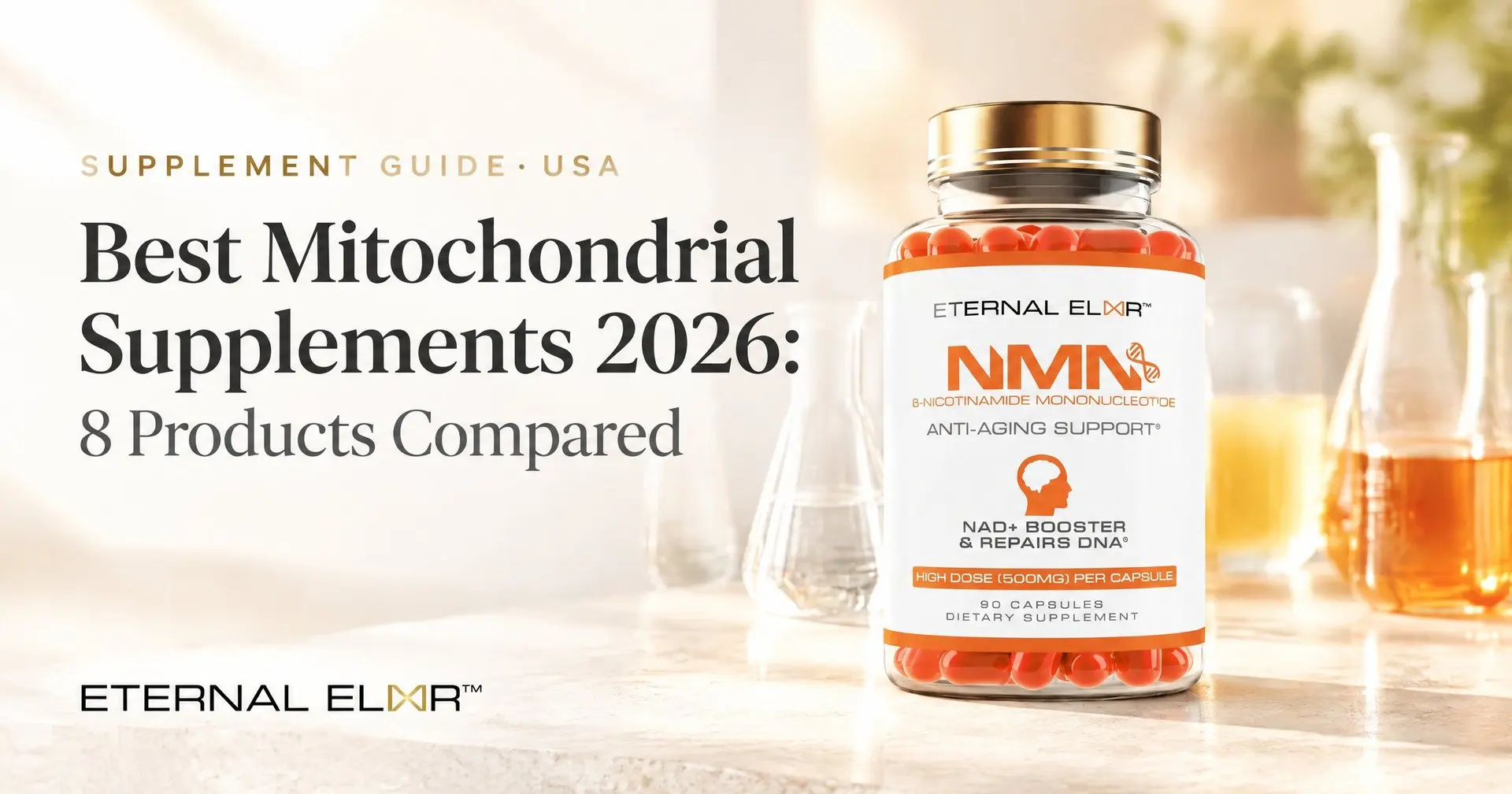
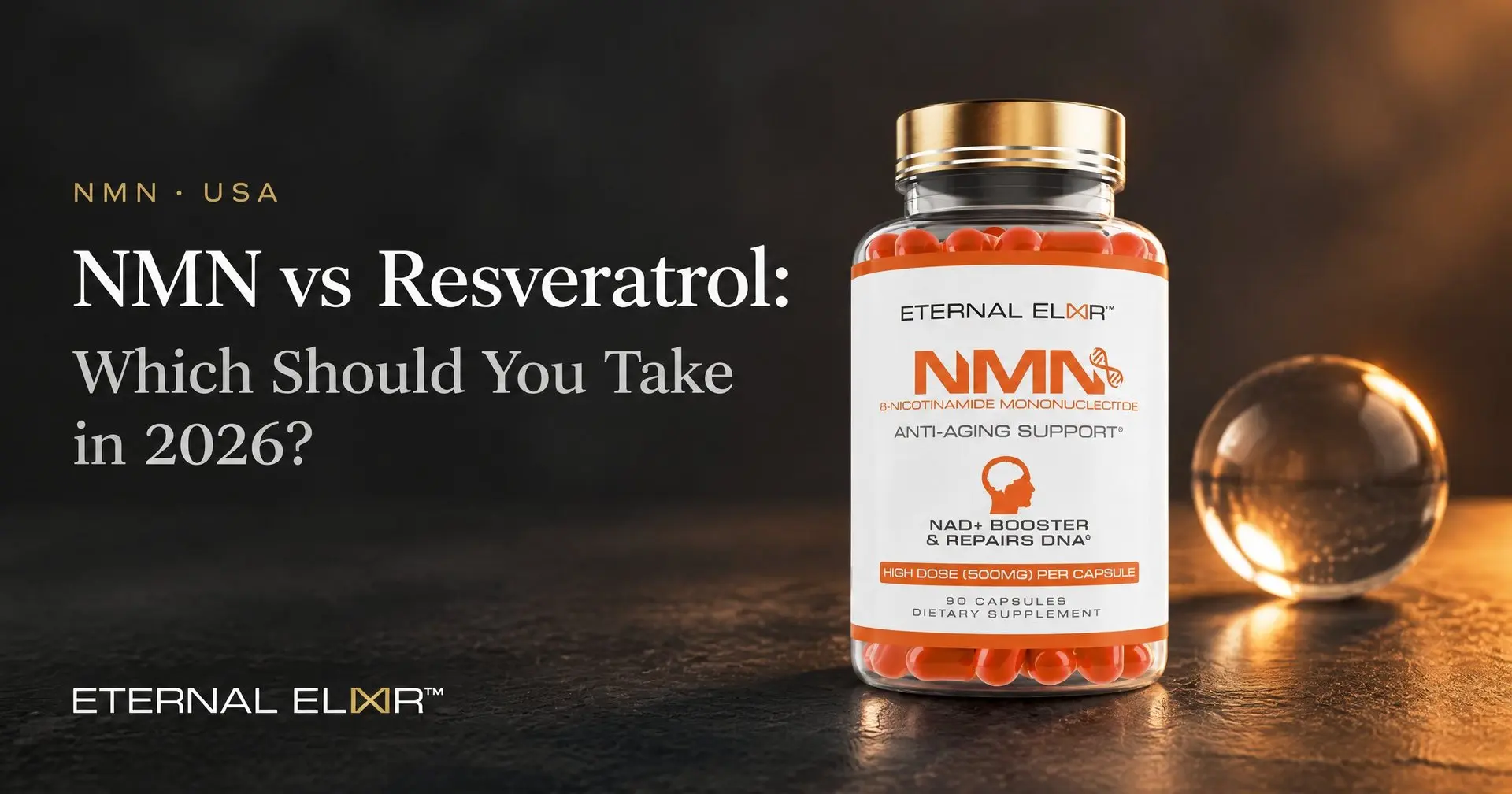
NMN 500mg. Each capsule contains 500 mg of NMN with rice flour and a cellulose capsule. A bottle holds 90 capsules for $49.99, which is $0.56 per 500 mg. One capsule sits inside the 300 to 900 mg range of the dose-ranging trial. Our product page notes that the label’s facts panel appears to use a two-capsule serving, which would be 1,000 mg. That is above the trial’s top dose of 900 mg and below the 1,250 mg tested for four weeks, so follow the bottle in hand and start with one capsule if you want to stay inside the dose-ranging trial.
Trans-Resveratrol 600mg. Each capsule holds 600 mg of 98% pure trans-resveratrol from Japanese knotweed root, 90 capsules for $59.99, or $0.67 a serving. That is three to four times the 150 to 200 mg used in the memory trials. If memory is your reason for buying, one capsule gives more than those trials used, and no trial has shown that more works better.
VitaSolutions NMN + Resveratrol 1100mg. 500 mg NMN and 600 mg trans-resveratrol per labeled serving, with black pepper extract, for $35.00. The product page says this exact combination has not been clinically tested.
NMN Advanced Longevity Complex. 500 mg NMN per two-capsule serving with 100 mg trans-resveratrol, 200 mg pterostilbene and three other actives, 30 servings for $64.99. The resveratrol is below the memory-trial doses, and the pterostilbene is inside the range tested in pterostilbene trials.
Add VitaSolutions NMN + Resveratrol to cart · $35.00
Other compounds sit in different chemical territory. Our Ca-AKG evidence review reads that research the same way this page reads NMN and resveratrol, and our longevity supplement comparison covers eight products. You can also browse the full Eternal Elixir range, our Nicotinamide Riboside 500mg, or more longevity research write-ups.
Frequently asked questions
What is better, resveratrol or NMN?
For raising NAD+, NMN. Every NMN trial on this page measured an NAD+ rise, and less than 1% of an oral resveratrol dose reaches the blood unchanged. For memory in older adults, resveratrol has the better human evidence, with two positive trials at 150 to 200 mg a day. Neither has been shown to extend human life.
Add NMN 500mg to cart · $49.99
Can I take resveratrol and NMN together?
Yes. No trial reports a problem with the pair. No trial has tested whether the pair does more than NMN alone, so the benefit of combining them is still theory. Take resveratrol with a meal, and keep each dose near the amounts used in trials.
Is NMN toxic to the liver?
Short trials have not found liver problems. A 4-week trial at 1,250 mg a day found no changes in blood chemistry beyond normal variation, and a 60-day trial found no safety issues up to 900 mg a day. There are no data beyond a few months. Talk to your doctor first if you have a liver condition.
What is more powerful than resveratrol?
Pterostilbene is the usual answer. In rats, about 80% of an oral dose reached the bloodstream against about 20% for resveratrol. It has far fewer human trials, so better absorption has not been shown to mean better results in people.
What is the difference between NMN and NAD+?
NAD+ is the coenzyme your cells use. NMN is its immediate precursor, one enzyme step away. Supplements supply NMN or nicotinamide riboside so the body can make the NAD+ itself.
How long does NMN take to work?
In the dose-ranging trial, blood NAD+ was already up at day 30, the first check, and stayed up at day 60. Walking distance improved over the same window. Plan on 30 to 60 days of daily use before judging it.
Is NMN just vitamin B3?
It is related. Vitamin B3 covers niacin (nicotinic acid) and nicotinamide, which the body can also turn into NAD+ by longer routes. NMN is nicotinamide with a ribose and a phosphate already attached, so it is closer to NAD+ than either form of B3.
Is there a downside to taking NMN?
Cost and uncertainty. The trials ran for weeks, not years, so long-term effects are unknown, and NMN costs more than most supplements to take daily. Short trials up to 1,250 mg a day did not find safety problems.
Is NMN really worth taking?
If you want to raise blood NAD+, the human data support it. If you want proof that it slows aging or extends life, no trial has shown that. Walking distance and muscle insulin sensitivity improved in single trials that still need repeating.
What is the best NMN and resveratrol supplement?
Our pick is Eternal Elixir NMN 500mg with our Trans-Resveratrol 600mg as a second bottle, which we make. Together they give the lowest cost per 500 mg of NMN among the options in our table that state a capsule count, and they let you set each dose. If you want one product, VitaSolutions NMN + Resveratrol gives 500 mg NMN and 600 mg resveratrol per labeled serving for $35.00, and Omre gives 500 mg of each per serving for $69.00.
The bottom line on NMN vs resveratrol
NMN has the more direct human evidence for what it is sold for: it raises blood NAD+ at 250 to 900 mg a day. Resveratrol has weaker absorption and a disputed mechanism, but it also has the better human results on memory, at 150 to 200 mg a day. If you take one, take NMN. If brain aging is your focus, add resveratrol at a modest dose. Neither has been shown to extend life. Our pick is Eternal Elixir NMN 500mg, with Trans-Resveratrol 600mg if you want both.
Sources
- Yi L, Maier AB, Tao R, et al. The efficacy and safety of β-nicotinamide mononucleotide (NMN) supplementation in healthy middle-aged adults: a randomized, multicenter, double-blind, placebo-controlled, parallel-group, dose-dependent clinical trial. GeroScience, 2023. PubMed 36482258
- Yoshino M, Yoshino J, Kayser BD, et al. Nicotinamide mononucleotide increases muscle insulin sensitivity in prediabetic women. Science, 2021. PubMed 33888596
- Okabe K, Yaku K, Uchida Y, et al. Oral administration of nicotinamide mononucleotide is safe and efficiently increases blood nicotinamide adenine dinucleotide levels in healthy subjects. Frontiers in Nutrition, 2022. PubMed 35479740
- Igarashi M, Nakagawa-Nagahama Y, Miura M, et al. Chronic nicotinamide mononucleotide supplementation elevates blood nicotinamide adenine dinucleotide levels and alters muscle function in healthy older men. npj Aging, 2022. PubMed 35927255. Participant count from the follow-up analysis: Nakagawa-Nagahama Y, et al. BMC Geriatrics, 2023. PubMed 36792992
- Kim M, Seol J, Sato T, et al. Effect of 12-week intake of nicotinamide mononucleotide on sleep quality, fatigue, and physical performance in older Japanese adults: a randomized, double-blind placebo-controlled study. Nutrients, 2022. PubMed 35215405
- Fukamizu Y, Uchida Y, Shigekawa A, et al. Safety evaluation of β-nicotinamide mononucleotide oral administration in healthy adult men and women. Scientific Reports, 2022. PubMed 36002548
- Walle T. Bioavailability of resveratrol. Annals of the New York Academy of Sciences, 2011. PubMed 21261636
- Pacholec M, Bleasdale JE, Chrunyk B, et al. SRT1720, SRT2183, SRT1460, and resveratrol are not direct activators of SIRT1. Journal of Biological Chemistry, 2010. PubMed 20061378
- Hubbard BP, Gomes AP, Dai H, et al. Evidence for a common mechanism of SIRT1 regulation by allosteric activators. Science, 2013. PubMed 23471411
- Witte AV, Kerti L, Margulies DS, Flöel A. Effects of resveratrol on memory performance, hippocampal functional connectivity, and glucose metabolism in healthy older adults. Journal of Neuroscience, 2014. PubMed 24899709
- Thaung Zaw JJ, Howe PR, Wong RH. Long-term effects of resveratrol on cognition, cerebrovascular function and cardio-metabolic markers in postmenopausal women: a 24-month randomised, double-blind, placebo-controlled, crossover study. Clinical Nutrition, 2021. PubMed 32900519
- Semba RD, Ferrucci L, Bartali B, et al. Resveratrol levels and all-cause mortality in older community-dwelling adults. JAMA Internal Medicine, 2014. PubMed 24819981
- Brown VA, Patel KR, Viskaduraki M, et al. Repeat dose study of the cancer chemopreventive agent resveratrol in healthy volunteers: safety, pharmacokinetics, and effect on the insulin-like growth factor axis. Cancer Research, 2010. PubMed 20935227
- Kapetanovic IM, Muzzio M, Huang Z, Thompson TN, McCormick DL. Pharmacokinetics, oral bioavailability, and metabolic profile of resveratrol and its dimethylether analog, pterostilbene, in rats. Cancer Chemotherapy and Pharmacology, 2011. PubMed 21116625
- Product pages for Omre NMN + Resveratrol, Life Extension NMN with Resveratrol Elite, and Eternal Elixir NMN 500mg, Trans-Resveratrol 600mg, VitaSolutions NMN + Resveratrol 1100mg and NMN Advanced Longevity Complex, read September 2026.
These statements have not been evaluated by the Food and Drug Administration. This product is not intended to diagnose, treat, cure, or prevent any disease.