Last updated: · Originally published August 5, 2026 · Published by Eternal Elixir
Edited by Elaine Fletcher, Researcher
Choosing among the best berberine supplements in 2026 is mostly a label-reading job. Almost every product uses the same compound, berberine hydrochloride (HCl), so the real differences are how much is in each capsule, how many capsules you take, what the bottle costs per milligram, and whether the brand shows you a lab result proving the capsule holds what the label says. That last point matters more than most buyers realize: when researchers tested 15 berberine supplements sold in the US, 9 of them fell outside 90% to 110% of their label claim.
We compared seven berberine products a US buyer can order today, priced each from its own product page, converted every one to the same unit (US dollars per 1,000 mg of berberine), and checked which brands publish a batch potency report.
Quick answer
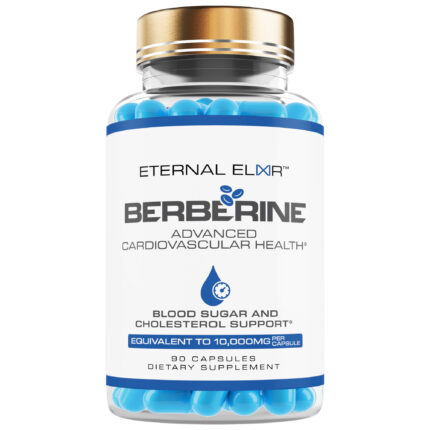
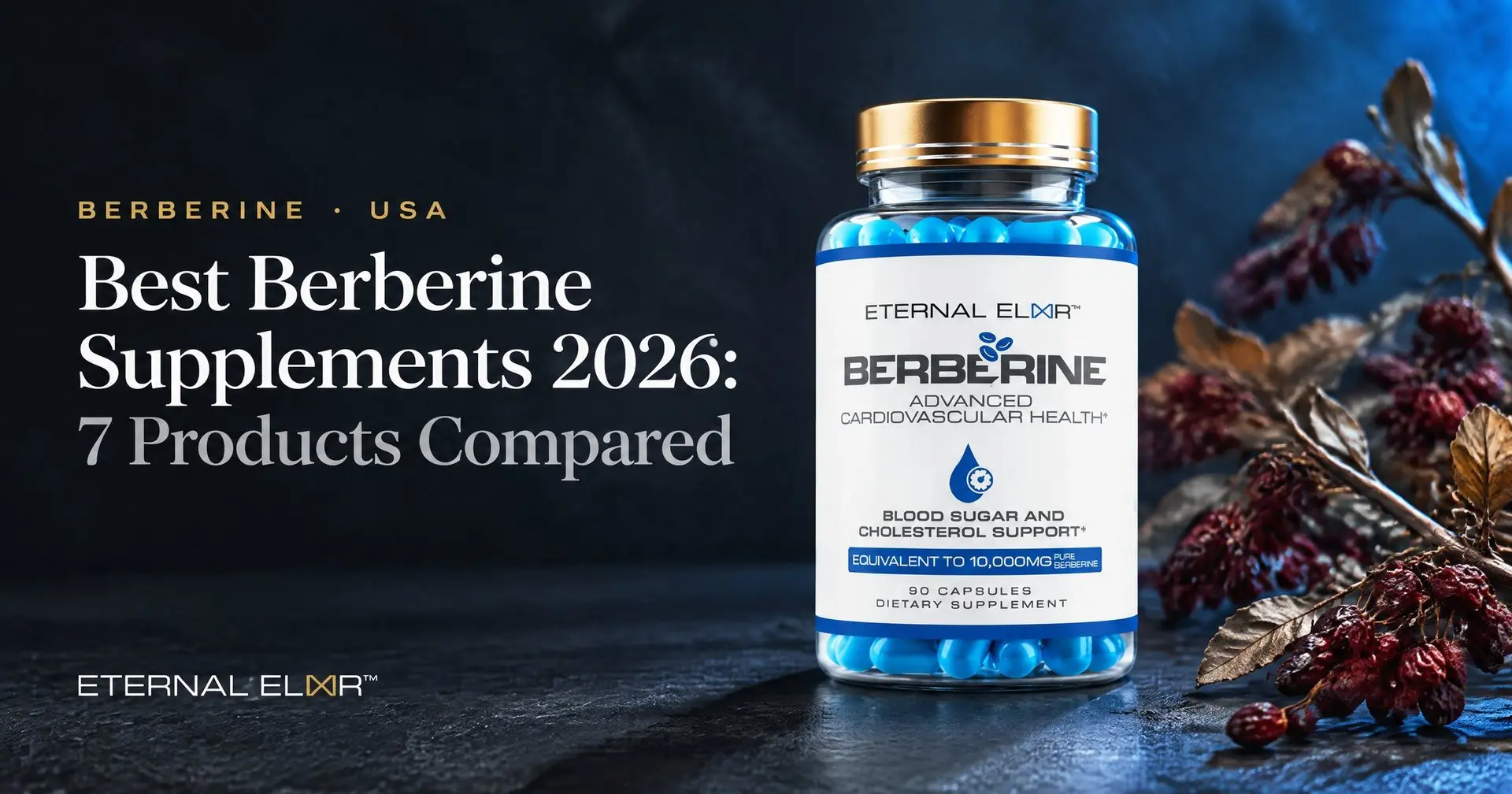
- Our pick: Eternal Elixir Berberine HCl 500mg. 500 mg of berberine HCl from a 20:1 concentrate in each capsule, one capsule per serving, 90 servings per bottle, and nothing else in the capsule but rice flour and cellulose.
- Best published lab testing: Toniiq Berberine 97%, whose linked certificate shows 565.77 mg per capsule against a 500 mg claim, at $0.67 per 1,000 mg.
- Lowest cost per milligram: Nutricost Berberine, 600 mg per capsule, at $0.58 per 1,000 mg.
- Before you buy: berberine affects enzymes that clear many prescription medicines. Talk to your doctor first if you take any.
How to choose the best berberine supplement
Berberine is a plant alkaloid. Most US products extract it from Berberis aristata (Indian barberry) and sell it as berberine HCl, the stable salt form studied in most trials. Because the form rarely differs, four other things separate a good product from a poor one.
1. A potency result you can see
This is the biggest one. In a 2018 study in the Journal of Dietary Supplements, Funk and colleagues bought 15 berberine supplements from US vendors and measured the berberine in three capsules of each. On average the products held 75% of their label claim, with a range from 33% to 100%. Nine of the 15 (60%) fell outside the 90% to 110% range normally required of pharmaceutical products. Price did not predict quality. A certificate of analysis (COA) that reports berberine per capsule for a specific lot is the only way to know what you are getting without testing it yourself.
2. Serving size and directions
A 600 mg capsule sounds stronger than a 500 mg one, but directions differ widely: one capsule a day, one twice a day, two capsules per serving, up to three times a day. Two bottles with the same shelf price can last one month or three. Always check capsules per bottle and the label directions together.
3. Standardization and extract details
Some brands state a purity figure (for example, 97% berberine) or an extract ratio (for example, 20:1). These help you judge what is in the capsule, though a batch potency result is more useful than either.
4. What else is in the capsule
Some products add cinnamon, black pepper extract or other herbs, and some use a different form such as berberine phytosome (berberine bound to phospholipids). Additions can suit people who want one product for several jobs. A single-ingredient capsule suits people who want to know exactly what each amount is doing.
The 7 best berberine supplements compared
Every row uses the brand’s own one-time price, as of Sep 2026, with subscription discounts excluded. “Cost per 1,000 mg” is the bottle price divided by the total berberine in the bottle.
| Rank | Product | Berberine per capsule | Capsules | Label directions | Price | Cost per 1,000 mg | Batch potency report on page | Buy |
|---|---|---|---|---|---|---|---|---|
| 1 | Eternal Elixir Berberine HCl 500mg | 500 mg HCl (20:1 concentrate) | 90 | 1 capsule per serving | $49.99 | $1.11 | No | View Berberine HCl 500mg |
| 2 | Toniiq Berberine 97% | 500 mg HCl (97% purity) | 90 | 1 capsule with a meal, up to 3 times a day | $29.97 | $0.67 | Yes | Toniiq |
| 3 | Double Wood Berberine | 500 mg HCl | Not stated on the brand page | 1 capsule with a meal, 1 to 3 times a day | $19.95 | Can’t be calculated from the brand page | Yes | Double Wood |
| 4 | Nutricost Berberine | 600 mg HCl | 60 | Not stated on the brand page | $20.97 | $0.58 | No | Nutricost |
| 5 | NOW Foods Berberine HCl 500 mg | 500 mg HCl | 90 | 1 capsule twice a day with food | $28.49 sale ($37.99 regular) | $0.63 sale ($0.84 regular) | No | NOW Foods |
| 6 | Swanson Premium Berberine 400 mg | 400 mg HCl | 60 | 1 capsule 2 to 3 times a day | $23.79 | $0.99 | No | Swanson |
| 7 | Thorne Berberine | 225 mg HCl + 275 mg phytosome (per capsule, from the 2-capsule serving) | 60 | 1 to 2 capsules twice a day with food | $44.00 | $1.47 (HCl plus phytosome weight) | No | Thorne |
The ranking is not the price column, and that is deliberate. Our Berberine HCl 500mg is one of the more expensive options per milligram, and Nutricost is the cheapest. Ranking only on unit price would reward whichever brand prints the least on its label, and the Funk study shows why the lab report often matters more than the price.
1. Eternal Elixir Berberine HCl 500mg: our pick
Label facts: 500 mg of berberine HCl per capsule from a 20:1 concentrate, which the label says is equivalent to 10,000 mg of starting powder. 90 capsules, one capsule per serving, 90 servings. Other ingredients: rice flour and a cellulose capsule. $49.99, or $0.56 per serving and $1.11 per 1,000 mg.
Eternal Elixir makes Berberine HCl 500mg, and it is our pick. The reasons are things you can check on the label:
- Everything you need is declared. Form, milligrams per capsule, extract ratio, capsule count and serving size are all on the product page, so you can work out the cost of a month without leaving it.
- One capsule, one serving, 90 servings. A bottle is a three-month supply at one capsule a day, with no two-capsule arithmetic.
- A single ingredient. No cinnamon, pepper extract or blend, which suits anyone stacking berberine with other products and wanting to control each amount.
- One order for a wider routine. Berberine ships with the rest of our range, including Ca-AKG, TUDCA, Reduced L-Glutathione and NMN. US orders over $100 ship free, and every order has a 30-day money-back guarantee.
Our product page states the evidence level for berberine rather than promising results. Buying two bottles saves 10%, three save 15% and five save 20%.
Who it suits: buyers who want a simple one-capsule, single-ingredient berberine and would rather order it alongside the rest of a routine from one brand.
Who it doesn’t suit: buyers who choose on cost per milligram alone (Nutricost is about half the price per milligram), and buyers who want a batch potency report on the product page before they buy. We don’t post one yet. Toniiq and Double Wood do.
Add Berberine HCl 500mg to cart · $49.992. Toniiq Berberine 97%: best published lab testing
Label facts: berberine HCl from wild-grown Berberis aristata, stated at 97% purity, 90 capsules, $29.97. Directions: one capsule with a meal, up to three times a day. At 500 mg per capsule, that is $0.67 per 1,000 mg. Free US shipping on orders over $49.
Toniiq gives a buyer the most to verify. The product page lists a five-point testing program for every lot, covering heavy metals and microbes in the raw material and finished product, and assays of the active ingredient in both. More usefully, it links the certificate itself. The linked report, from Certified Group in Tustin, California (an ISO/IEC 17025 accredited lab), covers lot 25K0291 and was issued November 24, 2025. It measured 565.77 mg of berberine HCl per capsule against a minimum of 500 mg, and lead at 0.02 mcg per capsule against a limit of 0.5 mcg.
Who it suits: buyers who want to see a lot-specific potency result before paying, at a mid-range price.
Who it doesn’t suit: buyers who want every figure in the page text. The milligrams per capsule appear on the certificate rather than in the page copy.
3. Double Wood Berberine: lowest shelf price, with a posted lot report
Label facts: 500 mg of berberine HCl per capsule, $19.95 a bottle (two bottles $37.91, three $53.87). Directions: one capsule with a meal, one to three times a day, no more than three capsules (1,500 mg) a day, starting with one and building up over one to two weeks.
Double Wood posts a lot-level test table on the product page. For lot 2601-22, manufactured in March 2026 and tested by Brand International, it reports 600 mg of berberine HCl per capsule against a 500 mg claim, lead at 0.002 mcg per capsule, and mercury, arsenic and cadmium not detected. The page also says every batch is tested by ISO/IEC 17025 accredited labs.
The gap is the capsule count. The product page doesn’t state how many capsules are in the bottle, so you can’t calculate cost per milligram from the brand’s own page. At $19.95 it is still the lowest outlay here for a first bottle.
Who it suits: first-time buyers who want a small outlay and a visible lot report. Our Double Wood review covers the wider range.
Who it doesn’t suit: anyone who wants to compare cost per milligram from the brand’s own page.
4. Nutricost Berberine: lowest cost per milligram
Label facts: 600 mg of berberine HCl in every capsule, 60 vegetarian capsules, $20.97. The bottle holds 36,000 mg of berberine, or $0.58 per 1,000 mg, the lowest in this comparison. The page says the product is tested by third-party ISO-accredited laboratories and made in a GMP-compliant facility.
Nutricost wins the price column clearly. The catch is information. Its own product page doesn’t state a serving size or directions, so you can’t tell from the brand page whether a bottle is meant to last one month or two, and we found no lot potency report on it. Nutricost also sells a berberine with Ceylon cinnamon ($27.97) and a dihydroberberine ($19.97), which are easy to confuse at checkout.
Who it suits: cost-focused buyers who already know how much they plan to take. Our Nutricost review looks at where the brand’s value holds up.
Who it doesn’t suit: anyone who wants the directions and a potency report from the brand before buying.
5. NOW Foods Berberine HCl 500 mg: easiest to find in stock
Label facts: 500 mg of berberine HCl from Berberis aristata bark per capsule, 90 veg capsules, one capsule per serving. Directions: one capsule twice a day with food. $28.49 on sale ($0.63 per 1,000 mg) or $37.99 regular ($0.84 per 1,000 mg). Other ingredients: hypromellose capsule, ascorbyl palmitate, magnesium stearate and silicon dioxide.
NOW is the brand most likely to be on a shelf near you, and its berberine is a plain single-ingredient capsule. NOW says the product is made and quality tested in the USA and lists an Intertek GMP supplement certification. It doesn’t post a lot potency report on the product page. At the label’s two capsules a day, a 90-capsule bottle lasts 45 days.
Who it suits: buyers who want a familiar brand and easy availability. See our NOW Foods review for the wider range.
Who it doesn’t suit: buyers who want a posted potency result, or who miss the sale price.
6. Swanson Premium Berberine 400 mg: a lower dose per capsule
Label facts: 400 mg of berberine HCl per vegan capsule, 60 servings, $23.79, or $0.99 per 1,000 mg. Directions: one capsule two to three times a day. Other ingredients: rice flour, hypromellose capsule, magnesium stearate and silica. The label says adults only and not during pregnancy or nursing.
Swanson’s 400 mg capsule is the smallest single-capsule dose here, which some people prefer when starting out. At two to three capsules a day, though, a 60-capsule bottle lasts 20 to 30 days, and it costs about 70% more per milligram than Nutricost. We found no lot potency report on the product page. Our Swanson review covers the brand in more depth.
Who it suits: cautious first-time users who specifically want a sub-500 mg capsule.
Who it doesn’t suit: anyone planning to take more than one capsule a day for long, since the per-milligram premium adds up.
7. Thorne Berberine: the phytosome option
Label facts: per two-capsule serving, 450 mg of berberine HCl from Indian barberry root extract plus 550 mg of berberine phytosome. 60 capsules, $44.00. Directions: one to two capsules twice a day with food. Other ingredients: calcium laurate and a hypromellose capsule. The label warns against use in pregnancy, while nursing or when trying to conceive.
Thorne is the only product here that combines standard berberine HCl with a phytosome, berberine bound to phospholipids, which is sold on the idea of better absorption. That formulation is the main reason for the price. The phytosome’s weight includes the phospholipid, so the $1.47 per 1,000 mg figure overstates how much berberine you get for the money. The page also lists 60 servings per container alongside a two-capsule serving and 60 capsules, which can’t all be right. We found no lot potency report on the product page. Our Thorne review looks at the brand’s pricing across its range.
Who it suits: buyers who specifically want a phytosome form from a practitioner-focused brand.
Who it doesn’t suit: cost-focused buyers, and anyone who wants the berberine content stated plainly per serving.
What a month really costs at each label’s directions
Cost per 1,000 mg is the fair way to compare bottles, but what you actually spend depends on how many capsules the label tells you to take. Here is 30 days at each brand’s own directions, using the prices above. The daily amounts differ, so read this alongside the cost per 1,000 mg column rather than instead of it.
| Product | Label directions | Berberine per day | Capsules in 30 days | Cost for 30 days |
|---|---|---|---|---|
| Eternal Elixir Berberine HCl 500mg | 1 capsule per serving | 500 mg | 30 | $16.66 |
| Toniiq Berberine 97% | 1 capsule, up to 3 times a day | 500 mg to 1,500 mg | 30 to 90 | $9.99 to $29.97 |
| NOW Foods Berberine HCl 500 mg | 1 capsule twice a day | 1,000 mg | 60 | $18.99 on sale, $25.33 regular |
| Swanson Premium Berberine 400 mg | 1 capsule 2 to 3 times a day | 800 mg to 1,200 mg | 60 to 90 | $23.79 to $35.69 |
| Thorne Berberine | 1 to 2 capsules twice a day | 1,000 mg to 2,000 mg (HCl plus phytosome weight) | 60 to 120 | $44.00 to $88.00 |
| Double Wood and Nutricost | Not calculable from the brand page (Double Wood gives no capsule count, Nutricost gives no directions) | |||
Two things stand out. At the same 500 mg a day, Toniiq and NOW on sale cost less per month than our capsule. And the labels themselves differ a lot on how much to take, from 500 mg a day on ours to up to 1,500 mg a day on Toniiq’s and Double Wood’s. A higher label dose makes a bottle run out faster, so a cheap bottle is not always a cheap month.
Berberine forms: HCl, phytosome, dihydroberberine and liposomal
Beyond standard berberine HCl, brands now sell several newer forms, usually priced on a promise of better absorption:
- Berberine HCl. The salt form used in most published human trials, and the form in six of the seven products ranked here.
- Berberine phytosome. Berberine bound to phospholipids. Thorne combines it with HCl, and Swanson sells a separate Berbevis phytosome product (550 mg, 30 capsules, $27.59). Because the phospholipid adds weight, the milligram figure on the label is not all berberine.
- Dihydroberberine. A related compound sold by Nutricost ($19.97) and Toniiq (Dihydroberberine 1000, $24.97 for 60 capsules).
- Liposomal berberine. Toniiq also sells a Liposomal Berberine 1500 ($22.97).
These newer forms may suit some buyers, but most of the human research used berberine HCl, and a different form makes the actual berberine content harder to compare between labels. If you try one, compare it on berberine content per day, not on the front-label number, and check the directions as closely as you would for HCl.
How we ranked these berberine supplements
We did not run lab tests. Every figure comes from a brand’s own product page or linked certificate, read in September 2026, or from the research linked below. Where a page contradicted itself or left something out, we say so in the entry rather than filling the gap with a retailer listing.
Eternal Elixir makes Berberine HCl 500mg, and it is our pick. It sits first for the reasons in its entry. The other six are ordered on:
- Published documentation: a lot potency report, contaminant testing and a complete label on the brand’s own page.
- Cost per 1,000 mg: the one-time price, with no subscription discount.
- Clarity of directions: whether the page tells you how many capsules to take, so you can work out how long a bottle lasts.
- Availability in the US: whether the product is in stock from the brand today.
Our pick scores well on label completeness, simplicity and range, and poorly on price per milligram and posted testing. Every figure is published above, so you can re-weight the list to suit your own priorities.
What the research on berberine shows
Berberine has a large clinical literature for a plant extract, with one important limit: most trials enrolled people with diagnosed metabolic conditions under medical care, not healthy adults taking a supplement. Reading those results as if the two groups were the same is the most common mistake in berberine content.
- Xie and colleagues, Frontiers in Pharmacology, 2022. A meta-analysis of 37 randomized trials with 3,048 patients found lower fasting blood glucose and HbA1c with berberine than in comparison groups, without more adverse events overall.
- Lan and colleagues, Journal of Ethnopharmacology, 2015. A meta-analysis of 27 randomized trials with 2,569 patients looked at blood glucose, blood lipids and blood pressure. Berberine alongside lifestyle changes or standard medicines tended to do better than those alone. No serious adverse reactions were reported, but the authors said the overall quality of the trials was limited.
- Guo and colleagues, European Journal of Clinical Pharmacology, 2012. Healthy men took 300 mg of berberine three times a day for two weeks. Berberine reduced the activity of three liver enzymes (CYP2D6, CYP2C9 and CYP3A4) that clear many common medicines.
Evidence level: many randomized trials, mostly small, mostly in patients, and of limited quality overall. The results support the research interest in berberine’s role in glucose and lipid metabolism. They don’t show that a supplement will produce the same results in a healthy person, and they were done on trial preparations, not on any product in this list.
We don’t give a daily milligram target on this page, because trial doses were used under medical supervision. Follow your product’s label. Our report on trial doses versus US label doses explains why that distinction matters across the supplement aisle.
Berberine side effects and safety
The most common complaint with berberine is digestive: upset stomach, cramping, constipation or loose stools. Several brands in this list tell you to take it with a meal, and Double Wood advises starting with one capsule and building up over one to two weeks.
The more serious issue is medicines. Because berberine slows enzymes that clear many drugs, it can raise the level of some prescriptions in your blood. Talk to your doctor or pharmacist before taking berberine if you take any prescription medicine, especially for blood sugar, blood pressure, blood clotting or mood. Thorne and Swanson both say their berberine is not for use in pregnancy or while nursing. Don’t give berberine to children.
Which berberine should you buy?
- One simple capsule a day, single ingredient, alongside a wider routine: Eternal Elixir Berberine HCl 500mg, our pick.
- A lot potency report before you pay: Toniiq Berberine 97% ($0.67 per 1,000 mg) or Double Wood Berberine ($19.95).
- The lowest cost per milligram: Nutricost Berberine ($0.58 per 1,000 mg).
- A brand you can find on a shelf today: NOW Foods Berberine HCl 500 mg.
- A lower dose per capsule: Swanson Premium Berberine 400 mg.
- A phytosome form: Thorne Berberine.
Berberine rarely sits alone in a routine. Buyers who land here often compare it with liver and energy support, which our TUDCA comparison, energy supplement comparison and mitochondrial supplement comparison cover. For the rest of a longevity routine, see our rankings of the best longevity supplements, NMN, glutathione and Ca-AKG. Our Dr. Berg review compares another cinnamon-and-berberine formula with ours. You can also browse all our supplement guides, the blog, the Eternal Elixir home page or the full shop.
Frequently asked questions about berberine supplements
What is the best berberine supplement?
Our pick is Eternal Elixir Berberine HCl 500mg: 500 mg of berberine HCl per capsule from a 20:1 concentrate, one capsule per serving, 90 servings, with nothing else in the capsule. If a posted lot potency report is your priority, Toniiq Berberine 97% is the strongest alternative, and Nutricost is the cheapest per milligram.
Add Berberine HCl 500mg to cart · $49.99
Which berberine brands publish lab results?
The easiest way to judge a brand is a published lot report. In this comparison, Toniiq links a certificate showing 565.77 mg per capsule against a 500 mg claim, and Double Wood posts a lot result of 600 mg per capsule. A 2018 study found 9 of 15 US berberine products outside 90% to 110% of their label claim, and price didn’t predict quality.
What’s the best form of berberine to take?
Berberine HCl is the form used in most human trials and in six of the seven products here. Phytosome and dihydroberberine forms are sold on claims of better absorption, but they cost more, and their labels can make the actual berberine content harder to compare.
What is the downside to taking berberine?
Digestive upset is the most common complaint, and taking it with meals and starting low can help. The bigger issue is interactions: berberine slows enzymes that clear many medicines, so talk to your doctor or pharmacist first if you take any prescription medicine. It is not for use in pregnancy or while nursing.
How much berberine should you take a day?
Follow your product’s label, because directions range from one capsule a day to three capsules a day. Trials used a range of doses in patients under medical care, which is different from a healthy adult choosing a supplement.
How long does a bottle of berberine last?
It depends on the capsule count and the directions. Our 90-capsule bottle lasts three months at one capsule a day. NOW’s 90 capsules last 45 days at its label’s two a day, and Swanson’s 60 capsules last 20 to 30 days at two to three a day.
Should berberine be taken with food?
Most labels in this comparison say to take it with a meal, which can reduce stomach upset. Follow the directions on the bottle you buy.
Sources
- Funk RS, et al. Variability in potency among commercial preparations of berberine. Journal of Dietary Supplements. 2018. PMID 28792254
- Xie W, et al. Glucose-lowering effect of berberine on type 2 diabetes: a systematic review and meta-analysis. Frontiers in Pharmacology. 2022. PMID 36467075
- Lan J, et al. Meta-analysis of the effect and safety of berberine in the treatment of type 2 diabetes mellitus, hyperlipemia and hypertension. Journal of Ethnopharmacology. 2015. PMID 25498346
- Guo Y, et al. Repeated administration of berberine inhibits cytochromes P450 in humans. European Journal of Clinical Pharmacology. 2012. PMID 21870106
- Toniiq. Berberine certificate of analysis, lot 25K0291.
- Product pages read September 2026: Eternal Elixir Berberine HCl 500mg, Toniiq Berberine 97%, Double Wood Berberine, Nutricost Berberine, NOW Foods Berberine HCl 500 mg, Swanson Premium Berberine, Thorne Berberine.
These statements have not been evaluated by the Food and Drug Administration. This product is not intended to diagnose, treat, cure, or prevent any disease.