Last updated: · Originally published November 8, 2026 · Published by Eternal Elixir
When researchers pooled 78 randomized trials covering 296,707 people, antioxidant supplements did not lower the risk of death, and two of them were linked with a small increase. That single finding is the best place to start if you are wondering whether antioxidants reverse aging. This guide explains where the idea came from, what the large human trials actually found, and where glutathione and resveratrol fit if you still want an antioxidant in your routine.
Disclosure: Eternal Elixir makes and sells supplements. When our own products appear in a comparison, they are named as Eternal Elixir products. No brand pays to be included. Our editorial standards
Key takeaways
- No human trial has shown that antioxidants reverse aging. A review of 78 trials found no drop in mortality from antioxidant vitamin pills.
- Your body makes its own antioxidants, led by glutathione. A six-month trial found oral glutathione raised body stores by 30 to 35% at 1,000 mg a day.
- High-dose vitamins C and E blunted some benefits of exercise in one trial. Ask your doctor first if you are pregnant or take prescription medicine.
Can antioxidants reverse aging? The short answer
Antioxidants are molecules that neutralize reactive oxygen species, the unstable byproducts of normal metabolism, sunlight and pollution. In a dish of cells, adding an antioxidant often reduces oxidative damage. In living people, the picture is more complicated, because the body already runs a tightly controlled antioxidant system of its own.
So when people ask whether antioxidants reverse aging, the honest answer has two parts. First, no human trial has shown that taking an antioxidant supplement extends lifespan or turns back biological age. Second, some antioxidants can raise the body’s own defenses or lower oxidative stress markers, which is a narrower and more realistic goal. Glutathione is the clearest example, and our evidence review of glutathione benefits goes through the trials one by one.
That distinction matters when you shop. A label that promises to reverse aging is making a claim the research does not support. A label that says an ingredient supports normal antioxidant function is describing what the studies actually measured.
Where the idea came from: free radicals and the aging cell
The free radical theory of aging, first proposed in the 1950s, suggested that damage from reactive oxygen species slowly builds up in cells and drives the decline we call aging. If that were the whole story, flooding the body with antioxidants should slow the process. It was a reasonable hypothesis, and it launched decades of research and a large supplement market.
Later work showed that reactive oxygen species are also signals. Cells use short bursts of oxidative stress to switch on their own repair and defense genes. Researchers call this adaptive response mitohormesis. It helps explain why blocking every free radical is not automatically good, and why the results of antioxidant trials in people have been so mixed.
Aging also involves much more than oxidation. Changes in mitochondria, inflammation, DNA repair and cellular energy all play a part. Oxidative stress is one thread in that picture. An antioxidant can only ever address that one thread.
Stocking up on glutathione? Every bottle of Eternal Elixir’s Reduced L-Glutathione 2000mg carries 90 capsules and ships fast across the United States. Browse the range →
Do antioxidants reverse aging in large human trials?
The most complete answer comes from a Cochrane review published in The Cochrane database of systematic reviews. Bjelakovic and colleagues pooled 78 randomized trials with 296,707 participants who took beta-carotene, vitamin A, vitamin C, vitamin E or selenium for anywhere from 28 days to 12 years. Overall, the supplements had no significant effect on mortality. In the trials with the lowest risk of bias, beta-carotene and vitamin E were linked with a small increase in deaths.
Those trials tested classic vitamin antioxidants, not every compound sold under the antioxidant label. Still, they are the closest thing we have to a direct test of the idea that antioxidants reverse aging, and the result was clear enough that the authors called for antioxidant supplements to be evaluated like medicines. The table below sets common claims against the strongest human evidence we could find for each one.
| Common claim | Strongest human evidence | What it means for you |
|---|---|---|
| Antioxidant pills help you live longer | 78 trials, 296,707 people: no drop in mortality; beta-carotene and vitamin E linked with a small rise | Do not take high-dose vitamin antioxidants expecting a longer life |
| Antioxidants make exercise work better | 39 young men, 4 weeks: vitamin C 1,000 mg plus vitamin E 400 IU blocked exercise gains in insulin sensitivity | Keep high-dose vitamin antioxidants away from a new training program |
| Oral glutathione is destroyed in the gut | 54 adults, 6 months: 1,000 mg a day raised glutathione 30 to 35% in blood cells and plasma | Oral glutathione can raise body stores; levels fell back after stopping |
| You can rebuild glutathione as you age | 24 older adults, 16 weeks of glycine plus NAC: glutathione deficiency and oxidative stress markers improved | Promising but small; supporting your own glutathione system is the better-studied angle |
| Antioxidants protect aging skin | Dermatology review: antioxidants described as one approach to limit UV-related skin aging | Pair any antioxidant with daily sunscreen, which has the stronger record |
Read across the right-hand column and a pattern appears. The strongest results come from restoring something the body is short of, while the weakest come from adding large amounts of a single vitamin on top of normal levels.
Why more antioxidants is not always better
A small but influential trial in Proceedings of the National Academy of Sciences of the United States of America tested this directly. Ristow and colleagues gave 39 healthy young men vitamin C at 1,000 mg a day and vitamin E at 400 IU a day, or no vitamins, during four weeks of exercise. Exercise improved insulin sensitivity only in the men who did not take the antioxidants. The vitamins also blocked the rise in the body’s own antioxidant enzymes that exercise normally triggers.
The researchers concluded that the short burst of oxidative stress from exercise is part of what makes exercise healthy. Mopping it up with high doses of antioxidants removed the signal. This is the same mitohormesis idea described above, seen in people rather than cells.
This does not mean every antioxidant blunts exercise. The trial used two specific vitamins at high doses, and it was short. It does mean that the belief that antioxidants reverse aging by sheer quantity has the biology backward. The goal is balance, and your own defenses are a large part of that balance.
Glutathione and resveratrol: two antioxidants worth a closer look
If the classic vitamins disappointed, why does anyone still take antioxidants for aging? Because a few compounds work differently. Glutathione is the body’s most abundant internal antioxidant, made inside cells from three amino acids. Resveratrol is a plant polyphenol from grapes and knotweed root that has been studied mostly for metabolic markers.
Glutathione: raising what the body already uses
For years, oral glutathione was assumed to be broken down before it could be absorbed. A six-month randomized trial in the European journal of nutrition tested that assumption. Richie and colleagues gave 54 non-smoking adults 250 mg or 1,000 mg of glutathione a day, or a placebo. Blood glutathione rose at both doses. At the higher dose, levels in red blood cells, plasma and lymphocytes rose by 30 to 35% after six months, and the ratio of oxidized to reduced glutathione fell, a sign of lower oxidative stress. Levels returned to baseline within a month of stopping.
A separate line of research looks at building glutathione from its precursors. In a 16-week randomized trial in The journals of gerontology. Series A, Biological sciences and medical sciences, Kumar and colleagues gave 24 older adults either glycine plus N-acetylcysteine or a placebo. The supplemented group saw improvements in glutathione deficiency, oxidative stress, mitochondrial markers and several measures of physical function. The trial was small, and it tested precursors rather than glutathione itself, but it supports the idea that falling glutathione is one piece of the aging picture.
Eternal Elixir’s Reduced L-Glutathione 2000mg supplies 2,000 mg of reduced glutathione per two-capsule serving. At $39.99 for 90 capsules, that works out to 45 servings at about $0.89 each. A full serving is double the trial’s top dose of 1,000 mg, while one capsule matches it, so ask your doctor which amount suits you and follow the physical label. The finished product itself has not been clinically tested, and every batch is third-party lab tested with a COA on request. If you want to compare forms and doses first, our glutathione supplement comparison lines up the options.
Resveratrol: interesting, but the human data is mixed
Resveratrol acts as an antioxidant in lab studies and became famous through animal research on aging. In people, trials have mostly measured blood sugar, blood pressure and fat metabolism, with some positive and some null results. Our guide to the resveratrol doses used in human trials walks through each study and what it found.
Eternal Elixir’s Trans-Resveratrol 600mg costs $59.99 for 90 capsules at one capsule per serving, or about $0.67 a day. Think of it as a way to explore a well-studied polyphenol, with realistic expectations. The same honest framing applies here: it may support normal antioxidant function, and it has not been shown to reverse aging. Eternal Elixir also sells Trans-Pterostilbene 500mg, a closely related stilbene, for readers who want to compare the two.
How to use antioxidants for aging without overpromising
If you have read this far, you know that the evidence rewards a careful approach. These steps reflect what the trials above actually support. Try one change at a time so you can tell what is helping.
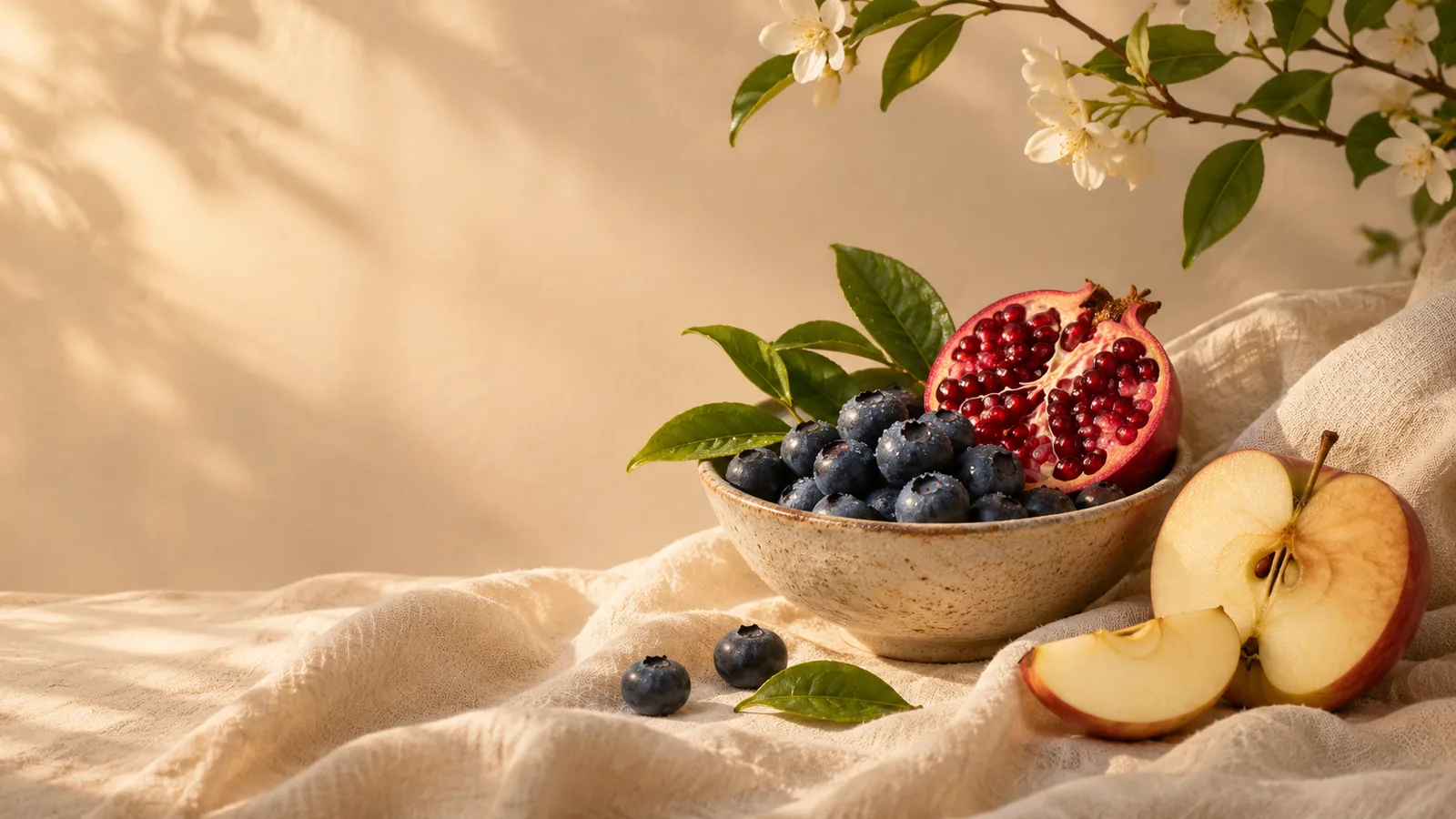
- Start with food. Berries, leafy greens, legumes, nuts, olive oil and tea deliver a mix of antioxidants at doses the body is used to, along with fiber and other nutrients.
- Skip high-dose beta-carotene and vitamin E. These were the two linked with higher mortality in the low-bias trials. Smokers should be especially careful with beta-carotene.
- Choose a target, not a megadose. If you supplement, pick a compound with human data for the outcome you care about, such as glutathione for body stores, and use the label amount.
- Protect the exercise signal. Exercise is one of the most reliable tools for healthy aging. Keep high-dose antioxidants away from workouts until better data exists.
- Use sunscreen for skin. For visible aging, daily sun protection does more than any pill, and topical antioxidants work best alongside it.
For a wider view of how antioxidants sit next to other longevity ingredients, our longevity supplement comparison covers NAD+ precursors, polyphenols and more. If you are deciding when in the day to take glutathione, see our guide to glutathione timing. Whichever route you take, talk to your doctor before starting any supplement if you are pregnant, nursing, under 18 or taking prescription medicine.
Antioxidants and aging: frequently asked questions
What helps reverse signs of aging?
No pill has been shown to reverse aging itself. For visible signs on the skin, daily sun protection and not smoking have the strongest support, and topical antioxidants are described in dermatology reviews as one way to limit UV-related damage. Inside the body, regular exercise, sleep and a diet rich in plants are linked with healthier aging. Antioxidant supplements are at most a small extra on top of those habits.
What are the five habits that can slow down aging?
There is no official list of five, but the habits with the most consistent evidence are staying physically active, not smoking, protecting your skin from the sun, sleeping well, and eating plenty of vegetables, fruit, legumes and whole grains. Each of these supports the body’s own antioxidant defenses without the risks seen with high-dose vitamin pills.
What are antioxidant tablets used for?
People take antioxidant tablets to support the body’s normal defense against oxidative stress. Some forms have specific human data: oral glutathione raised glutathione levels in blood and cells over six months, for example. Large trials of vitamins A, C, E, selenium and beta-carotene did not find that they prevent death or disease in the general population.
Do antioxidants help with skin aging?
The best support is for topical antioxidants used with sunscreen. A review in the Journal of dermatological science describes antioxidants as one approach to limiting UV-related skin aging. Evidence that swallowed antioxidants change wrinkles is thinner. Our review of glutathione benefits in human trials covers the small skin studies that exist for oral glutathione.
Is it safe to take antioxidant supplements every day?
It depends on which one and how much. High-dose beta-carotene and vitamin E were linked with slightly higher mortality in the Cochrane review. Oral glutathione at up to 1,000 mg a day for six months was well tolerated in its trial. See our glutathione safety guide for who should check with a doctor first, including anyone pregnant, nursing or on prescription medicine.
Should I take antioxidants right before a workout?
The only strong signal here comes from vitamins C and E, which blunted gains in insulin sensitivity when taken daily alongside a new exercise program. No trial has tested glutathione or resveratrol timing in the same way. If exercise is a big part of your aging plan, a cautious choice is to keep high-dose antioxidants away from your training window and talk to your doctor about it.
Your longevity stack starts here
Fast US shipping · Third-party tested · Full-size bottles
Shop Eternal Elixir →Recommended for you
About Eternal Elixir
Eternal Elixir is a supplement company specializing in longevity and nootropic formulations. All products are third-party tested for purity, manufactured under strict quality controls, and ship fast across the United States. Browse the full range at eternalelixir.com/shop.