Last updated: · Originally published September 24, 2026 · Published by Eternal Elixir
Edited by Elaine Fletcher, Researcher
TUDCA vs milk thistle (and NAC) is not a choice between three strengths of the same thing. TUDCA is a bile acid, milk thistle supplies silymarin (a group of plant antioxidants), and NAC supplies the cysteine the body uses to make glutathione. They act in different ways, they have different evidence, and they cost different amounts. This guide compares all three on what human trials found, including the results that came back negative, plus doses, cost per day, interactions and whether you can take them together.
Quick answer
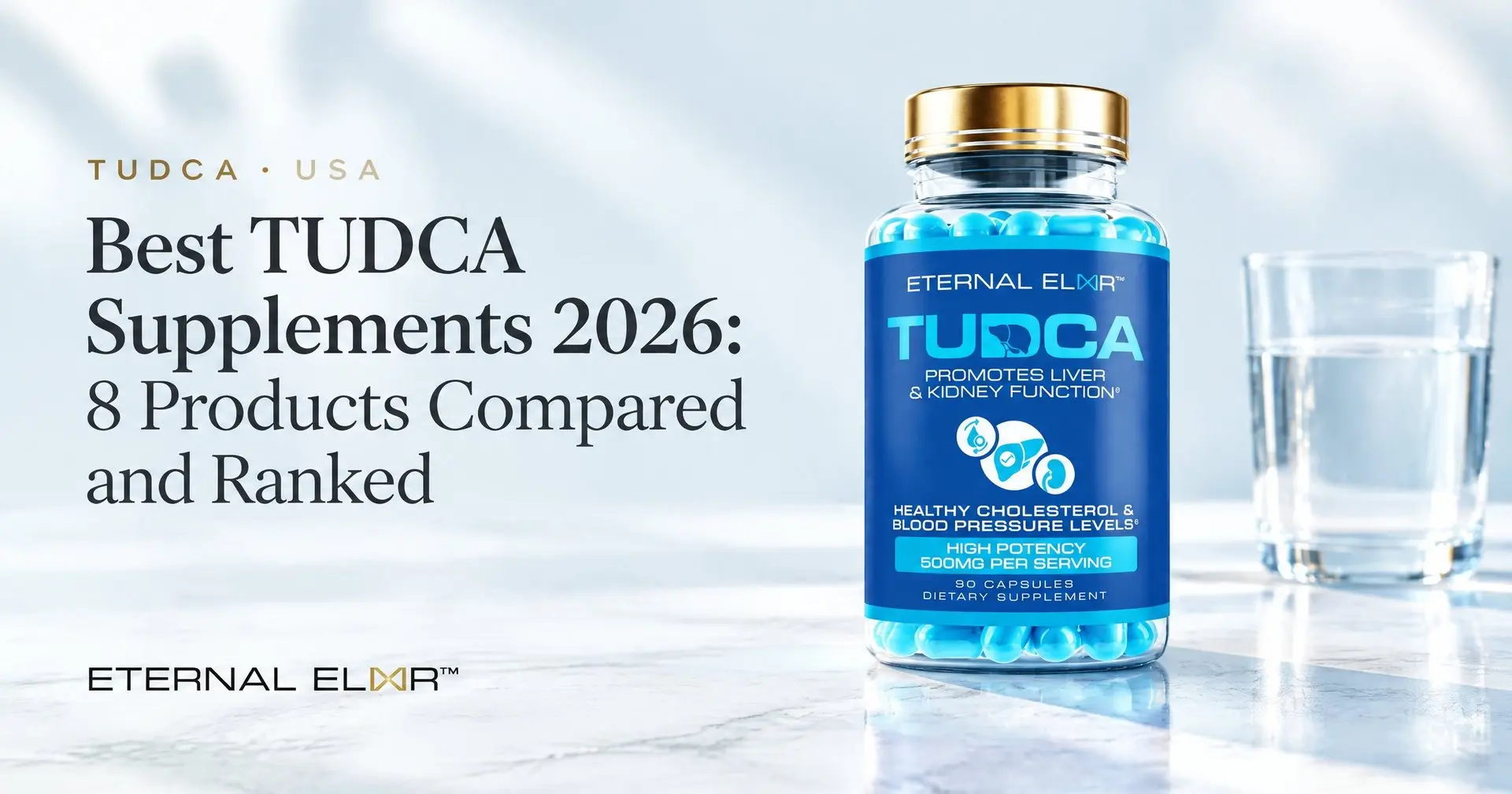
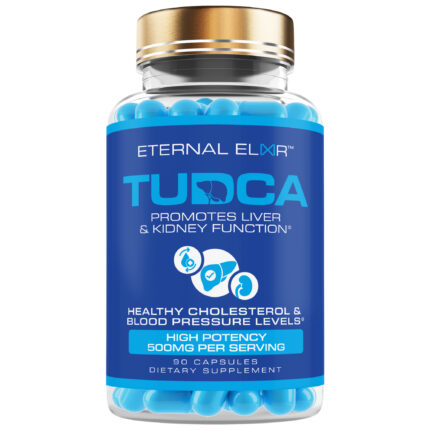
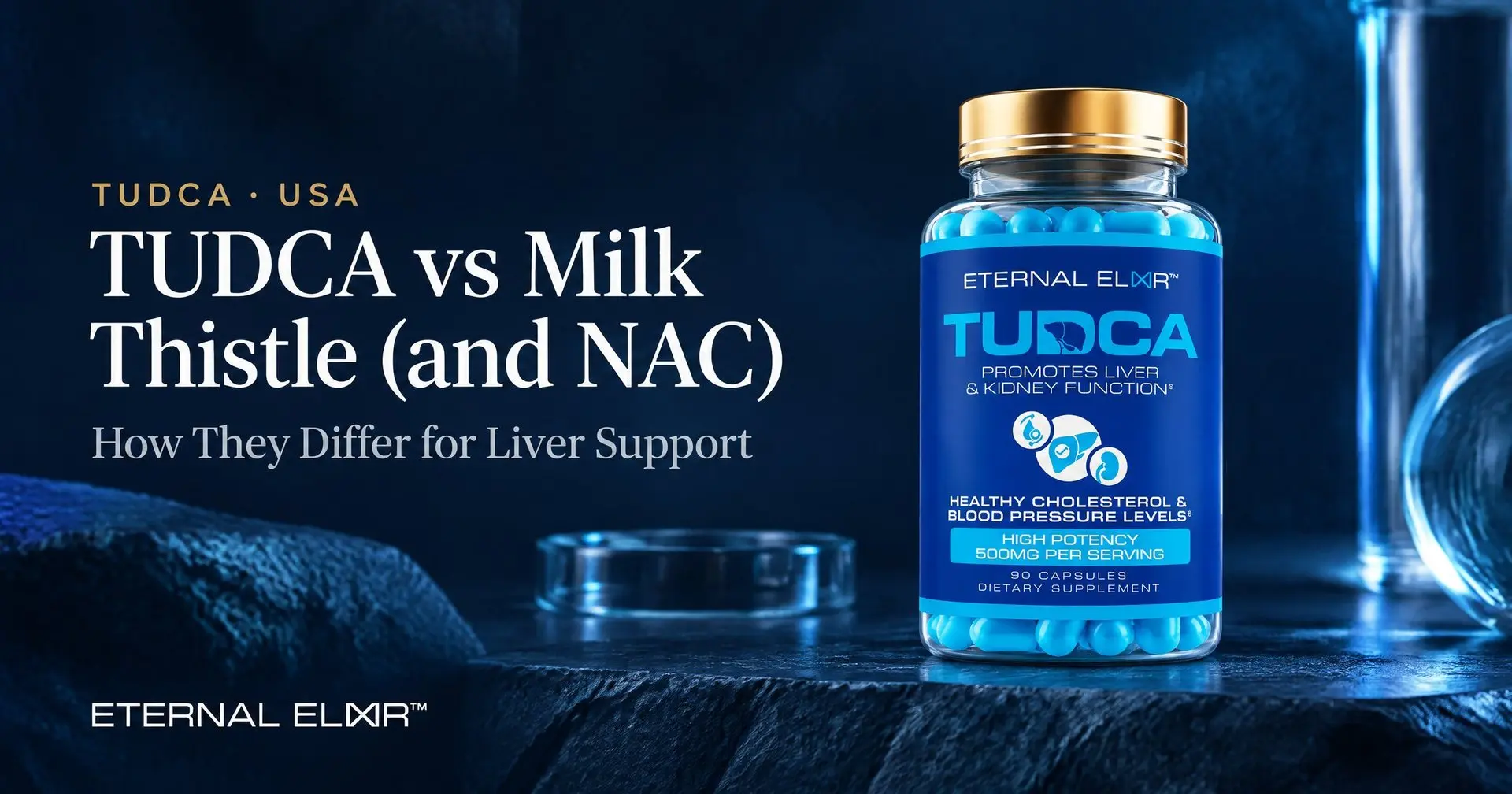
- TUDCA is itself a bile acid. It is the direct choice if your interest is bile. Our pick is Eternal Elixir TUDCA 500mg: one capsule, 60 servings, $1.00 a day.
- Milk thistle has far more trials, but the best-controlled ones mostly didn’t beat placebo. It is the cheapest of the three.
- NAC helps the body rebuild glutathione, and seems to do most when glutathione is low. A recent 12-week liver trial found no benefit.
- Together: no human trial has tested any combination of the three, so start one at a time and check your medications first.
The short answer: three compounds, three different jobs
TUDCA is the most direct fit if your interest is bile. It is a bile acid, and taking it shifts the bile acid pool toward more water-soluble forms. Milk thistle is a plant extract with a large but inconsistent trial record. NAC keeps glutathione, the body’s main antioxidant, topped up when it runs low. One caution applies to all three: nearly all the liver research involved people with diagnosed conditions under medical care, and those results don’t carry over automatically to healthy adults.
TUDCA vs milk thistle vs NAC: side by side
| TUDCA | Milk thistle (silymarin) | NAC | |
|---|---|---|---|
| What it is | A bile acid: UDCA joined to the amino acid taurine | An extract from the seeds and fruit of a daisy-family plant | A stable form of the amino acid cysteine |
| Main mechanism studied | Makes the bile acid pool more water soluble, eases stress in the cell’s protein factory (animal data) | Antioxidant and anti-inflammatory activity in lab studies | Supplies cysteine to rebuild glutathione that has run low |
| Strength of human evidence | Limited: small trials, mostly in diagnosed conditions | Many trials, mixed. Large controlled trials mostly negative | Strong for hospital use after overdose, weak for general liver support |
| Doses in human studies | 500 mg to 1,750 mg a day | 420 mg to 700 mg of silymarin, three times a day, in the large US trials | 2,400 mg a day in a recent liver trial |
| Example cost per day, as of Sep 2026 | $1.00 (our TUDCA 500mg), $0.93 (Double Wood) | $0.30 (NOW Milk Thistle Extract Double Strength) | Not priced here (we don’t sell NAC) |
| Main cautions | Closely related to the prescription bile acid ursodiol | Can affect how some drugs are processed; allergy risk with related plants | Low blood pressure with nitroglycerin in a hospital study |
What is TUDCA?
TUDCA (tauroursodeoxycholic acid) is ursodeoxycholic acid (UDCA) joined to the amino acid taurine. The body makes small amounts of it, and it is more water soluble than most of the bile acids the body produces, which is why researchers are interested in it.
What TUDCA does in the body
In a six-month study published in Gut in 1996, people with a diagnosed bile-duct condition took 500 mg, 1,000 mg or 1,500 mg of TUDCA a day. UDCA rose to between about a third and two-fifths of the bile acids in their bile (34.4%, 32.8% and 41.6% at the three doses), and the share of the body’s own, less water-soluble bile acids fell. The TUDCA was partly stripped of its taurine and rejoined to taurine or glycine as it cycled between the gut and liver.
In mice, TUDCA also acted as a “chemical chaperone” that eased stress in the endoplasmic reticulum, the part of the cell that folds proteins. That is animal data, and it doesn’t tell you what happens in people.
Human research on TUDCA
In a small randomized trial by Kars and colleagues, published in 2010, 20 adults with a high body mass index took 1,750 mg of TUDCA a day or a placebo for four weeks. Insulin sensitivity in the liver and muscle rose by about 30% with TUDCA and didn’t change with placebo. Markers of endoplasmic reticulum stress in muscle and fat tissue didn’t change, so how TUDCA works in people is still unsettled.
The largest TUDCA trial, published in Medicine in 2016, compared 750 mg a day of TUDCA with the same dose of UDCA in 199 patients with a diagnosed bile-duct condition, for 24 weeks. The two performed similarly on liver enzyme markers, and both were well tolerated with comparable side effect rates. For dosing and timing detail, see our TUDCA benefits, dosage and safety guide and our guide to when to take TUDCA.
What is milk thistle (silymarin)?
Milk thistle (Silybum marianum) is a flowering plant in the daisy family. Supplements use an extract of its fruit and seeds called silymarin, a mix of compounds of which silybin is the best known. Good extracts are standardized: NOW’s Double Strength capsule, for example, lists 300 mg of extract standardized to 240 mg of silymarin.
How well silymarin is absorbed
Absorption is milk thistle’s weak point. In a 2008 study, three healthy volunteers took a single 600 mg dose of standardized extract. The silymarin compounds were cleared quickly, with half-lives of 1 to 3 hours for the free forms, and most of what circulated had already been converted into bound (conjugated) forms.
Human research on milk thistle
Milk thistle has far more liver trials than TUDCA, but the better-controlled ones mostly missed their main goals:
- A 2012 trial in JAMA: 154 adults with a long-term liver condition who had not responded to standard treatment took 420 mg or 700 mg of silymarin three times a day, or a placebo, for 24 weeks. Liver enzyme levels fell no more than on placebo.
- A 2019 trial in PLoS One: 78 adults with a biopsy-confirmed liver condition took 420 mg or 700 mg three times a day, or a placebo, for 48 weeks. The main tissue endpoint was reached by 19% on 420 mg, 15% on 700 mg and 12% on placebo, not a significant difference. Side effects were similar across groups.
- A 2007 Cochrane review: 18 randomized trials in 1,088 patients with liver conditions linked to alcohol or viruses found no significant effect on death rates, complications or liver tissue. Only 28.6% of the trials were of high quality.
- A 2024 meta-analysis: 26 trials in 2,375 patients with a common metabolic liver condition found lower liver enzymes and better blood fats with silymarin. The authors noted its effects still need confirmation.
The US National Center for Complementary and Integrative Health sums up the trials as conflicting or too limited to allow conclusions, and says milk thistle taken by mouth appears well tolerated. Its positive signals come mostly from pooling smaller studies.
Where NAC fits
NAC (N-acetylcysteine) is a stable form of cysteine, one of the three amino acids in glutathione. Hospitals have long used it after acetaminophen overdose, where it gives the liver the raw material to rebuild glutathione. That supervised medical use is not a model for everyday supplements.
A 2014 review in Pharmacology and Therapeutics stressed that NAC’s antioxidant benefit depends on it being turned into glutathione inside cells, which matters most when glutathione is running low. In a 2026 trial, 60 adults with a metabolic liver condition took 2,400 mg of NAC a day plus lifestyle changes, or lifestyle changes alone, for 12 weeks. NAC made no significant difference to oxidative stress, insulin resistance, or liver fat and stiffness.
NAC or glutathione?
NAC supplies a raw material. Glutathione supplements supply the finished molecule. In a six-month randomized trial published in the European Journal of Nutrition in 2015, 54 healthy adults took 250 mg or 1,000 mg of oral glutathione a day, and glutathione in blood rose at both doses, by 30% to 35% in red blood cells, plasma and lymphocytes at the higher dose. Levels fell back within a month of stopping. Our Reduced L-Glutathione 2000mg holds 1,000mg per capsule, and our glutathione supplement guide compares forms and doses.
Evidence at a glance
| Claim | TUDCA | Milk thistle | NAC |
|---|---|---|---|
| Changes a measurable marker in people | Yes: bile acid pool, insulin sensitivity in a small trial | Mixed: some pooled analyses, large trials negative | Rebuilds glutathione when low |
| Improves liver health in healthy adults | Not shown | Not shown | Not shown |
| Tested in combination with the others | No | No | No |
| Generally well tolerated in trials | Yes, in trials up to 24 weeks | Yes | Yes, in the 12-week trial |
What’s better for the liver, NAC or TUDCA?
Neither has been shown better for the liver in healthy people, because neither has been tested that way. They work differently. TUDCA is a bile acid, and its best trial showed it performed like the standard bile acid drug in patients with a diagnosed condition. NAC is a glutathione precursor that seems to matter most when glutathione is depleted, and its most recent liver trial was negative. If bile is your interest, TUDCA is the direct choice. If antioxidant capacity is, NAC or glutathione fits better.
Can you take TUDCA, milk thistle and NAC together?
No human trial has tested TUDCA with milk thistle, TUDCA with NAC, or all three together, so there is no evidence that a combination works better than one product alone. We found no reported interaction between them either. Many people combine them because they act through different routes, but “complementary” is a hypothesis, not a tested finding. If you combine them:
- Start one at a time, a week or two apart, so you can tell which one causes any change, including stomach upset.
- Check your medications first, especially blood pressure or heart medicines and ursodiol (see below).
- Compare blends with studied doses. Multi-ingredient blends can hold less of each ingredient than trials used. Our supplement dose gap report shows how to check.
- Don’t manage an abnormal liver test yourself. Raised liver enzymes have many causes, so see a doctor first.
TUDCA vs ursodiol (UDCA)
Ursodiol is the prescription drug name for ursodeoxycholic acid (UDCA). TUDCA is UDCA with taurine attached, and swallowed TUDCA partly loses its taurine as it cycles between the gut and liver, so the two feed the same family of bile acids. In the 199-patient trial above, 750 mg a day of TUDCA or UDCA produced similar changes in liver enzymes. That was a supervised drug trial in a diagnosed population. It says nothing about using a supplement in place of a prescription.
If you take ursodiol or any other prescription medicine, talk to your prescriber before adding TUDCA. Don’t stop, reduce or swap a prescribed medicine on your own. Taking both means more of the same bile acid.
Is TUDCA hard on the liver?
In the human trials reviewed here, TUDCA was generally well tolerated. In the 24-week trial of 199 patients, adverse event rates were similar to UDCA’s, and itching rose in the UDCA group but not in the TUDCA group. That doesn’t rule out rare problems, and there is no long-term safety data for TUDCA supplements in healthy people or in pregnancy. Anyone with abnormal liver tests should involve a doctor.
What not to mix with TUDCA, milk thistle or NAC
TUDCA
- Ursodiol: use TUDCA only with your prescriber’s input.
- Liver, gallbladder or bile duct conditions: use only under medical supervision.
- Pregnancy and breastfeeding: we found no human safety data for TUDCA supplements. Double Wood’s label, for example, says not to use it if pregnant, nursing or under 18.
Milk thistle
- Drug processing: lab studies suggested milk thistle can slow some liver enzymes that break down medicines. A 2014 study in 9 healthy volunteers found no significant change in four of those enzymes after 14 days. But in a 2009 study of 12 healthy men, 140 mg of silymarin three times a day for 14 days reduced the conversion of the blood pressure drug losartan to its active form, most clearly in men with the most common CYP2C9 gene variant. If you take prescription medicines, ask your pharmacist.
- Allergy: milk thistle may cause allergic reactions, particularly in people allergic to related plants such as ragweed, chrysanthemum, marigold and daisy.
- Pregnancy and breastfeeding: little is known about its safety.
NAC
- Nitroglycerin: in a hospital study, intravenous nitroglycerin plus high-dose intravenous NAC caused symptomatic low blood pressure in 7 of 24 patients, against none of 22 on nitroglycerin alone. Talk to your doctor before taking NAC if you use any nitrate medicine.
- Any prescription medicine: check with your doctor or pharmacist before starting.
How to choose between TUDCA, milk thistle and NAC
- Bile flow and bile acid balance: TUDCA is the only one of the three that is itself a bile acid. Human studies have used 500 mg to 1,750 mg a day. Our TUDCA buyer’s guide compares brands.
- A widely used plant extract, accepting mixed results: milk thistle, if you have no allergy to related plants and have checked your medications. Look for a stated silymarin amount.
- Antioxidant capacity: NAC or glutathione, noting that NAC seems to do most when glutathione is low.
- Abnormal liver tests, a diagnosed condition or prescriptions: start with your doctor.
For a ranked comparison across all three ingredients, see our best liver supplements comparison. Brand reviews: Double Wood, which sells TUDCA and NAC, and Nutricost, which sells TUDCA in two strengths.
Why we make TUDCA 500mg the way we do
Eternal Elixir makes TUDCA 500mg, and it is our pick for anyone who has chosen TUDCA. Each capsule holds 500mg of tauroursodeoxycholic acid, the label serving is one capsule, and the bottle holds 60 capsules, so 60 servings for $59.99, or $1.00 a day. The only other ingredients are rice flour and a cellulose capsule. Multi-bottle orders save 10% on two bottles, 15% on three and 20% on five. The product page says the TUDCA trial it links was in a diagnosed patient population and that the finished product has not been clinically tested. Double Wood’s TUDCA costs $0.93 a day at its 2-capsule serving and publishes a lot certificate on its page, if that matters more to you.
Frequently asked questions
Which is better, TUDCA or milk thistle?
Neither is better across the board, because they do different things. TUDCA is a bile acid and fits best if your interest is bile. Milk thistle is a plant extract with far more trials, but the best-controlled ones mostly didn’t beat placebo, and it costs less per day. If you choose TUDCA, our pick is Eternal Elixir TUDCA 500mg, one capsule a day. Eternal Elixir makes it.
Add TUDCA 500mg to cart · $59.99
Can you take TUDCA, milk thistle and NAC together?
No interaction between them has been reported, but no human trial has tested any combination, so there is no evidence a stack beats one product alone. If you combine them, start one at a time, a week or two apart, and check your prescriptions first.
What’s better for the liver, NAC or TUDCA?
Neither has been shown better in healthy people. TUDCA is a bile acid that performed like the standard bile acid drug in a patient trial. NAC helps rebuild glutathione when it is low, and a recent 12-week liver trial of 2,400 mg a day found no significant benefit.
Is TUDCA hard on the liver?
In the trials reviewed here, TUDCA was generally well tolerated, with side effect rates similar to the standard bile acid drug over 24 weeks. There is no long-term safety data in healthy people, so anyone with abnormal liver tests should involve a doctor.
What should you not mix with TUDCA?
Don’t combine TUDCA with ursodiol or another bile-acid prescription without your prescriber’s input, and check with your doctor before adding it to any prescription medicine. People with a liver, gallbladder or bile duct condition should use it only under medical supervision.
Is TUDCA the same as ursodiol?
No, but they are closely related. Ursodiol is the prescription form of ursodeoxycholic acid (UDCA), and TUDCA is UDCA joined to taurine. Never stop or change a prescribed medicine on your own.
Who should avoid milk thistle?
People allergic to related plants such as ragweed, chrysanthemum, marigold or daisy, and anyone on prescription medicines until they have checked with a pharmacist. Little is known about its safety in pregnancy or breastfeeding.
Sources
- Setchell KD, et al. Metabolism of orally administered tauroursodeoxycholic acid in patients with primary biliary cirrhosis. Gut. 1996. PMID 8675100
- Ozcan U, et al. Chemical chaperones reduce ER stress and restore glucose homeostasis in a mouse model of type 2 diabetes. Science. 2006. PMID 16931765
- Kars M, et al. Tauroursodeoxycholic acid may improve liver and muscle but not adipose tissue insulin sensitivity in obese men and women. Diabetes. 2010. PMID 20522594
- Ma H, et al. A multicenter, randomized, double-blind trial comparing the efficacy and safety of TUDCA and UDCA in Chinese patients with primary biliary cholangitis. Medicine (Baltimore). 2016. PMID 27893675
- Wen Z, et al. Pharmacokinetics and metabolic profile of free, conjugated, and total silymarin flavonolignans in human plasma after oral administration of milk thistle extract. Drug Metabolism and Disposition. 2008. PMID 17913795
- Fried MW, et al. Effect of silymarin (milk thistle) on liver disease in patients with chronic hepatitis C unsuccessfully treated with interferon therapy: a randomized controlled trial. JAMA. 2012. PMID 22797645
- Navarro VJ, et al. Silymarin in non-cirrhotics with non-alcoholic steatohepatitis: a randomized, double-blind, placebo controlled trial. PLoS One. 2019. PMID 31536511
- Rambaldi A, et al. Milk thistle for alcoholic and/or hepatitis B or C virus liver diseases. Cochrane Database of Systematic Reviews. 2007. PMID 17943794
- Li S, et al. Administration of silymarin in NAFLD/NASH: a systematic review and meta-analysis. Annals of Hepatology. 2024. PMID 38579127
- Kawaguchi-Suzuki M, et al. The effects of milk thistle (Silybum marianum) on human cytochrome P450 activity. Drug Metabolism and Disposition. 2014. PMID 25028567
- Han Y, et al. Effect of silymarin on the pharmacokinetics of losartan and its active metabolite E-3174 in healthy Chinese volunteers. European Journal of Clinical Pharmacology. 2009. PMID 19221727
- Rushworth GF, Megson IL. Existing and potential therapeutic uses for N-acetylcysteine: the need for conversion to intracellular glutathione for antioxidant benefits. Pharmacology and Therapeutics. 2014. PMID 24080471
- Ramadan AM, et al. Effect of high dose N-acetyl cysteine supplementation on markers of oxidative stress and insulin resistance in non-diabetic patients with metabolic dysfunction associated steatotic liver disease: a randomized controlled trial. BMC Gastroenterology. 2026. PMID 42587287
- Horowitz JD, et al. Combined use of nitroglycerin and N-acetylcysteine in the management of unstable angina pectoris. Circulation. 1988. PMID 3127076
- Richie JP Jr, et al. Randomized controlled trial of oral glutathione supplementation on body stores of glutathione. European Journal of Nutrition. 2015. PMID 24791752
- National Center for Complementary and Integrative Health. Milk thistle.
- Product pages read September 2026: Double Wood TUDCA, NOW Milk Thistle Extract Double Strength, Eternal Elixir TUDCA 500mg.
These statements have not been evaluated by the Food and Drug Administration. This product is not intended to diagnose, treat, cure, or prevent any disease.