Last updated: · Originally published August 6, 2026 · Published by Eternal Elixir
Edited by Elaine Fletcher, Researcher
Quick answer: No side effects have been reported in the two controlled human studies of turkesterone, but they are small and short. In one, 11 young men took single doses of 1,000 mg and 2,000 mg. None of them reported any stomach symptoms, and heart rate and blood pressure showed no significant change over 24 hours. In the other, 31 active adults took 500 mg a day for four weeks, and the paper does not mention adverse events. No study has run longer than four weeks, measured testosterone, or checked liver markers after turkesterone. The stomach upset people mention online comes from user reports, not trials. The bigger practical risk is a bottle that doesn’t contain what the label says.
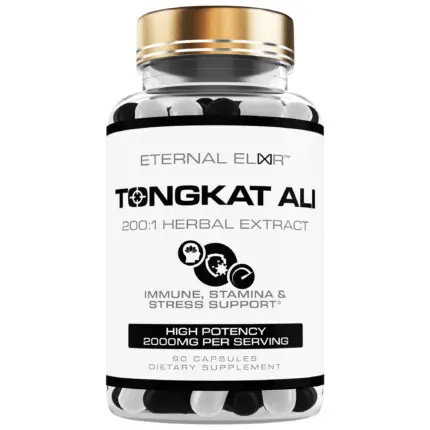
Eternal Elixir sells a turkesterone capsule, so we have a stake in this topic. Ours was out of stock when we wrote this. If you want an in-stock option from our range for a men’s training routine, our Tongkat Ali is below. It is a different ingredient with its own research, not a turkesterone substitute. Every study figure in this article comes from the published papers, read on September 25, 2026, and our product facts come from our own product pages. Here is how we write and review content.
Turkesterone side effects in human studies so far
Turkesterone is a plant ecdysteroid, a steroid-shaped compound from the herb Ajuga turkestanica. Plants make ecdysteroids, and insects use related molecules to control molting. Most of the research on turkesterone is in rats and cell cultures. Only two controlled human studies have tested it, and one closely related compound, ecdysterone, has a longer trial.
| Study | Who took part | Dose and length | What was measured | Side effects reported |
|---|---|---|---|---|
| Harris and colleagues, Muscles, 2024 | 11 healthy men, average age 23 | Single doses of 1,000 mg and 2,000 mg and a placebo, each followed for 24 hours | IGF-1, resting metabolic rate, blood lipids and sugars, heart rate, blood pressure, a stomach symptom questionnaire | None. No participant reported any symptoms on the questionnaire, and heart rate and blood pressure showed no significant change |
| Antonio and colleagues, Research Directs in Health Sciences, 2024 | 31 active adults (14 men, 17 women) | 500 mg a day or a rice flour placebo for 4 weeks | Body composition by DXA scan | Not reported. The paper does not mention adverse events, and it was not designed as a safety study |
| Isenmann and colleagues, Archives of Toxicology, 2019 (ecdysterone, not turkesterone) | 46 young men in a strength program | Ecdysterone products for 10 weeks | Muscle mass, strength, blood and urine markers | No rise in blood markers of liver or kidney strain |
Put together, the record is clean but thin. The single-dose study is the only one that asked participants about symptoms, and it followed them for a day. The four-week trial measured body composition and found no change, so it tells you little about safety either way. Evidence level: two small human studies with no reported harms, and no data beyond four weeks.
Why the safety record looks cleaner than it is
The most-quoted safety line is not a result. The Harris paper opens by describing turkesterone as a plant steroid “touted” for its properties “with no reported adverse side effects compared with traditional anabolic androgenic steroids.” That sentence summarizes how the supplement is marketed. It is not something the study measured, yet it gets repeated as if it were a finding.
The people studied were young and healthy. Nobody over middle age, nobody with a health condition and nobody taking regular medicines has been studied on turkesterone. The absence of reported side effects applies only to people like those volunteers.
The online side effect lists come from user reports. Search-result summaries list nausea, bloating, headaches and appetite changes as turkesterone side effects. None of those appeared in the one study that asked, which recorded no symptoms at 1,000 mg or 2,000 mg. They may still happen for some people, especially on an empty stomach or with other supplements, but they have not been measured.
A lot of the ecdysteroid evidence is about a different molecule. Ecdysterone, also called 20-hydroxyecdysone, is found in plants such as spinach, quinoa and Rhaponticum carthamoides, and it has the longer human trial. Turkesterone is a separate compound. Results for one should not be read across to the other.
Is turkesterone bad for your liver?
No study has measured liver markers after turkesterone in people, so there is no direct answer. The closest data come from the 10-week ecdysterone trial above, where the authors saw no rise in blood markers of liver or kidney strain in 46 young men. That is reassuring for the ecdysteroid family, but it was a different compound in a short study.
If you have a liver or kidney condition, take prescription medicines, or drink heavily, talk to your doctor before taking turkesterone or any other steroid-like plant extract. A blood test before and after a course is the only way to know how your own body responds.
Does turkesterone affect testosterone?
No human study has measured testosterone or estrogen after turkesterone, so claims in either direction are unproven. Turkesterone is not an anabolic androgenic steroid, and the Isenmann paper cites lab work suggesting ecdysterone acts through an estrogen receptor rather than the androgen receptor. That mechanism has not been tested for turkesterone in people. In the single-dose study, IGF-1, a growth-related hormone marker, rose slightly after turkesterone but not by a statistically significant amount.
If you compete in a drug-tested sport, check your sport’s anti-doping rules before you use any ecdysteroid product, because ecdysteroid supplements have been found to contain amounts that differ from their labels.
Label accuracy: the risk nobody lists
The side effect you are most likely to meet is paying for something that isn’t in the bottle. In a 2026 study in Molecules (Todorova and colleagues), researchers tested 13 supplements labeled as containing ecdysteroid plant extracts, including Ajuga turkestanica. Several products standardized to 80% to 95% ecdysterone contained far less than declared, from below the detection limit to about 50 mg per capsule. Turkesterone content also varied among products sold as standardized extracts.
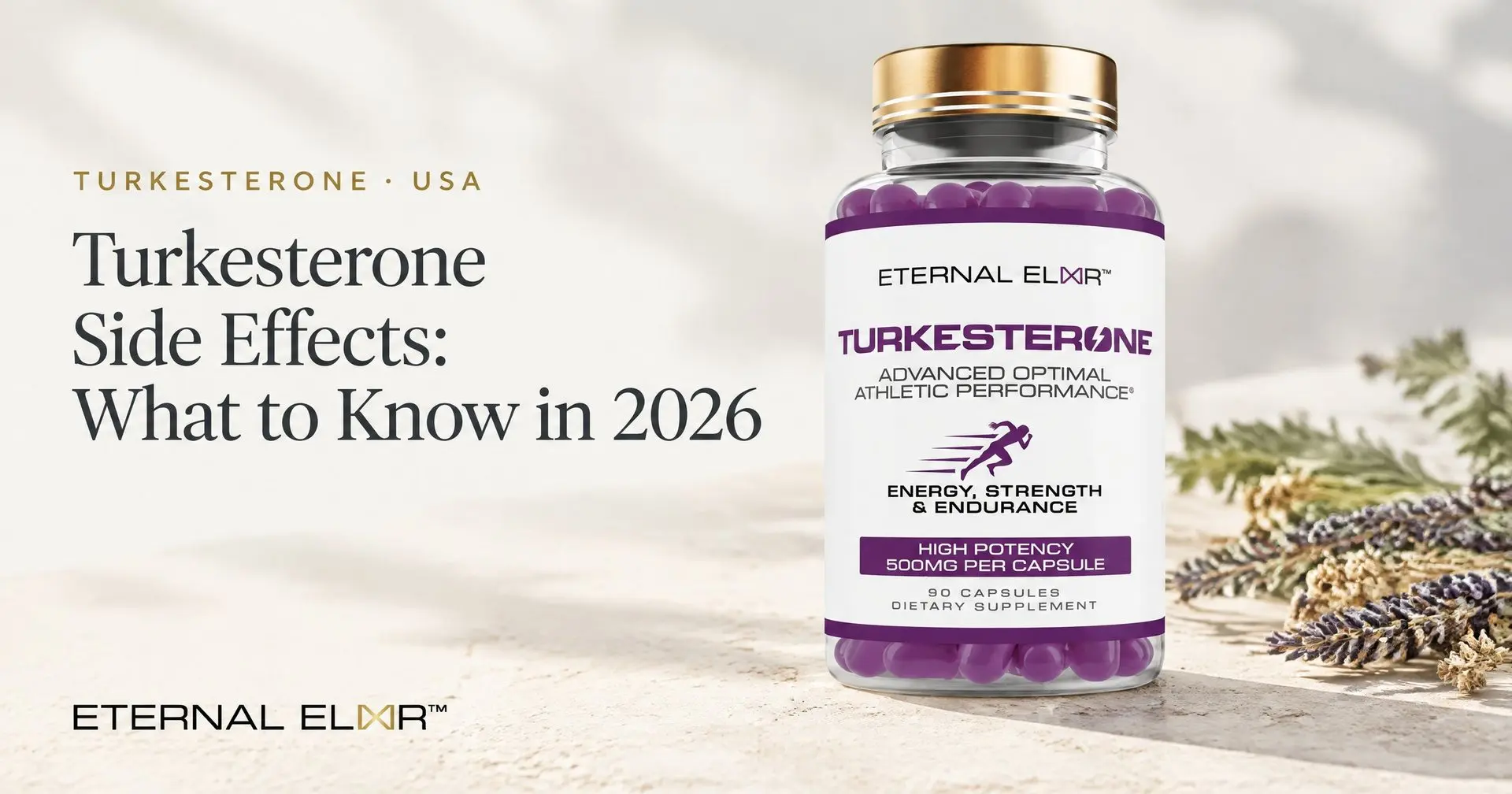
Read the label for two numbers: the extract weight per capsule and the percentage of turkesterone it is standardized to. Our Turkesterone 500mg declares 500 mg of Ajuga turkestanica extract per capsule. Its label gives extract weight rather than an isolated turkesterone percentage, and our product page says so. Our turkesterone supplement comparison sets the major US labels side by side, and our supplement dose gap report covers how label doses compare with trial doses across categories.
What does turkesterone do to the body?
In rats, the answer looks impressive. A 1976 study gave castrated rats 0.5 mg per kg of body weight of turkesterone and other ecdysteroids daily for 10 days and reported increases in muscle mass and protein content. In people, the results so far are flat:
- Single doses of 1,000 mg and 2,000 mg did not significantly change IGF-1, resting metabolic rate or fat and carbohydrate use in 11 young men.
- 500 mg a day for four weeks did not change body mass, lean mass, fat mass or body-fat percentage compared with placebo in 31 active adults.
The Harris authors suggest one reason: plant ecdysteroids appear to be poorly absorbed when swallowed. Evidence level: anabolic effects in rats, none shown yet in two small human studies. Our turkesterone versus creatine guide compares it with a supplement that has a far larger body of human trials.
Who should be most cautious with turkesterone
Because the human data cover a few dozen young, healthy volunteers, the groups below have no evidence to go on at all. That is a reason for caution, not proof of harm.
- Pregnant or breastfeeding women and anyone under 18: nobody in these groups has been studied, so skip it.
- People taking prescription medicines: there are no interaction studies. Ask your doctor or pharmacist before combining turkesterone with any regular medicine.
- People with a hormone-related, liver or kidney health condition: talk to your doctor first. The one study that checked liver and kidney markers was on ecdysterone, not turkesterone.
- Drug-tested athletes: check your sport’s anti-doping rules, and remember that label accuracy in this category is uneven.
- Anyone stacking several new products: if you start turkesterone alongside other supplements, you won’t know which one caused a problem. Add one product at a time.
When to take turkesterone, and how to lower your risk
No study has compared times of day. The single-dose trial gave turkesterone in the morning, and the four-week trial gave it daily. If you decide to try it:
- Follow the label. Our Turkesterone 500mg label gives one capsule per serving. The four-week trial used 500 mg a day, the only daily dose tested over several weeks.
- Take it with food if your stomach is sensitive to new supplements, and start one new product at a time so you can tell what causes what.
- Set an end date. There are no human data beyond four weeks, so decide in advance how long you will take it and what you expect to see.
Our turkesterone, and in-stock options from our range
Our Turkesterone 500mg gives 500 mg of Ajuga turkestanica extract per capsule, 60 capsules per bottle, one per serving, and its product page states the null result of the four-week trial. It was out of stock when we checked. If you want something from our range for a men’s training routine while it is away, these are different ingredients with their own research and safety profiles, not substitutes:
- Tongkat Ali 200:1 Extract 2000mg: 2,000 mg of 200:1 Eurycoma longifolia root extract per three-capsule serving, 90 capsules for $29.99, or $1.00 a serving. Our tongkat ali supplement comparison covers the human trials, which used specific standardized extracts.
- Korean Panax Ginseng 1600mg: two capsules per serving, 90 capsules for $44.99, or $1.00 a serving. Our ginseng guide for men and ginseng evidence guide cover the research.
If you are looking at our Tongkat Ali + Fadogia blend, read our Fadogia agrestis guide first for what is and isn’t known about its safety. For the wider category, see our natural testosterone booster comparison and our guide to shilajit for men.
Turkesterone side effects: frequently asked questions
Is turkesterone safe?
No side effects were recorded in the single-dose study of up to 2,000 mg in 11 young men, and the four-week trial of 500 mg a day in 31 active adults did not report any. That is too little data to call it safe for long-term use. Nobody has studied it beyond four weeks, in older adults, or alongside prescription medicines.
Can you take turkesterone every day?
The only multi-week human trial gave 500 mg every day for four weeks and did not report any adverse events. There are no data on daily use for longer than that, so if you take it daily, set a fixed end date and talk to your doctor if you plan a longer course.
Can turkesterone lower testosterone?
There is no evidence either way, because no human study has measured testosterone after turkesterone. It is not an anabolic androgenic steroid and is not thought to act on the androgen receptor, but that has not been confirmed with hormone tests in people.
Is turkesterone a steroid?
Chemically, it has a steroid-shaped backbone, which is where the name comes from. It is not an anabolic androgenic steroid or a hormone your body makes. It is a plant compound in the ecdysteroid family.
What are the long-term side effects of turkesterone?
They are unknown. The longest human study lasted four weeks. Anyone who says turkesterone is safe for months of use is going beyond the evidence.
Is turkesterone safer than anabolic steroids?
It is a different kind of compound, so the comparison is loose. Turkesterone is a plant ecdysteroid, not a synthetic anabolic androgenic steroid, and the human studies so far have recorded none of the hormonal side effects linked to anabolic steroids. They also showed none of the muscle-building effects. Safer in the studies so far does not mean proven safe over months.
Is turkesterone stronger than creatine?
No, on current evidence. Creatine has a large body of human research, summarized in a 2017 position stand from the International Society of Sports Nutrition, showing gains in high-intensity exercise performance and training adaptations. Turkesterone has two small human studies, and neither found a significant effect on muscle, body composition or metabolism. Our turkesterone and creatine comparison goes through both.
Does turkesterone cause hair loss?
No study has reported hair loss with turkesterone. None has lasted long enough, or measured the hormones involved, to rule it out either. If you notice changes you are worried about, stop taking it and talk to your doctor.
Is turkesterone worth it?
On current human evidence, it is a gamble on results rather than safety. Four weeks at 500 mg a day did not change body composition compared with placebo. If you still want to try it, choose a label that states the extract weight and standardization, and keep the course short. Our product page for Turkesterone 500mg states that null result next to the product.
The bottom line on turkesterone side effects
The two small human studies of turkesterone recorded no side effects, and they also found no effect on muscle or metabolism. The real unknowns are long-term use, hormones and label accuracy. If you try it, keep the course short, read the label for extract weight and standardization, and talk to your doctor if you take medicines or have a health condition. If you want an in-stock product from our range while our turkesterone is away, our Tongkat Ali gives 2,000 mg of 200:1 root extract per serving, 90 capsules for $29.99.
Browse the rest of our range in the Eternal Elixir shop.
Sources
- Harris DR, Chapman-Lopez T, Machek SB, et al. The effects of multiple acute turkesterone doses on indirect measures of hypertrophy and metabolic measures: a preliminary investigation. Muscles, 2024. PubMed 40757520
- Antonio J, Silver T, Lukowiak A, Jiannine L. A preliminary investigation of turkesterone: it’s not Deca. Research Directs in Health Sciences, 2024. DOI 10.53520/rdhs2024.104126
- Isenmann E, Ambrosio G, Joseph JF, et al. Ecdysteroids as non-conventional anabolic agent: performance enhancement by ecdysterone supplementation in humans. Archives of Toxicology, 2019. PubMed 31123801
- Todorova V, Ivanova S, Ardasheva R, Ivanov K. Simultaneous LC-MS profiling of bioactive ecdysteroids in nutrient-dense plant sources and dietary supplements. Molecules, 2026. PubMed 41976134
- Todorova V, Ivanova S, Chakarov D, et al. Ecdysterone and turkesterone: compounds with prominent potential in sport and healthy nutrition. Nutrients, 2024. PubMed 38732627
- Kreider RB, Kalman DS, Antonio J, et al. International Society of Sports Nutrition position stand: safety and efficacy of creatine supplementation in exercise, sport, and medicine. Journal of the International Society of Sports Nutrition, 2017. PubMed 28615996
- Eternal Elixir product pages for Turkesterone 500mg, Tongkat Ali 200:1 Extract 2000mg and Korean Panax Ginseng 1600mg (US, September 2026).
These statements have not been evaluated by the Food and Drug Administration. This product is not intended to diagnose, treat, cure, or prevent any disease.