Last updated: · Published by Eternal Elixir
Edited by Elaine Fletcher, Researcher
Most methylene blue side effects at supplement doses are mild and predictable: blue or green urine, a blue tint on the tongue if you use drops, and occasional stomach upset or headache. The serious risk is a drug interaction. Methylene blue blocks an enzyme called monoamine oxidase A, so combining it with serotonin-raising antidepressants can trigger serotonin toxicity, a medical emergency.
This guide sorts methylene blue side effects by how common and how serious they are, shows what a 10 mg oral dose means next to the hospital doses where serious reactions were reported, and lists who should skip it. If you want the upside first, our guide to the research on methylene blue benefits covers it. Eternal Elixir sells Methylene Blue Capsules 10mg USP, so we have a direct interest in you using it safely.
Key takeaways
- Common methylene blue side effects are harmless discoloration of urine (blue or green), mild nausea and headache.
- The dangerous interaction is with SSRI and SNRI antidepressants and other serotonin-raising drugs; do not combine them unless a clinician who knows your medicines approves.
- People with G6PD deficiency, and anyone pregnant or breastfeeding, should avoid it unless a clinician advises otherwise.
- A 10 mg capsule is a small fraction of the per-kilogram hospital doses linked to serious reactions, but small does not mean interaction-proof.
Methylene Blue Side Effects at a Glance
Methylene blue is a dye with real drug activity. At the 10 mg amount in an oral supplement, most people notice little beyond the color it leaves behind. The table below groups the methylene blue side effects that drug references and the published case literature describe, from the ones you are almost certain to see to the ones that need urgent care.
| Effect | What it looks like | How likely at a 10 mg oral dose | What to do |
|---|---|---|---|
| Urine discoloration | Blue or green urine within hours | Expected | Harmless; the dye is being cleared by the kidneys |
| Mouth or tongue staining | Blue tint on tongue and teeth | Common with drops, rare with capsules | Rinse with water; capsules avoid contact with the mouth |
| Stomach upset | Mild nausea or loose stools | Occasional | Take it with food and a full glass of water |
| Headache or dizziness | Mild, usually short-lived | Occasional | Stop if it persists and talk to a clinician |
| False low pulse oximeter reading | Fingertip oxygen reading drops while you feel fine | Possible after a dose | Tell staff before any procedure that uses an oximeter |
| Serotonin toxicity | Agitation, sweating, tremor, muscle jerks, fast heart rate, fever | Rare, and almost always with serotonergic medicines | Emergency care right away |
| Red blood cell breakdown (hemolysis) | Fatigue, dark urine, yellowing skin or eyes | A concern mainly with G6PD deficiency | Avoid methylene blue if you have G6PD deficiency |
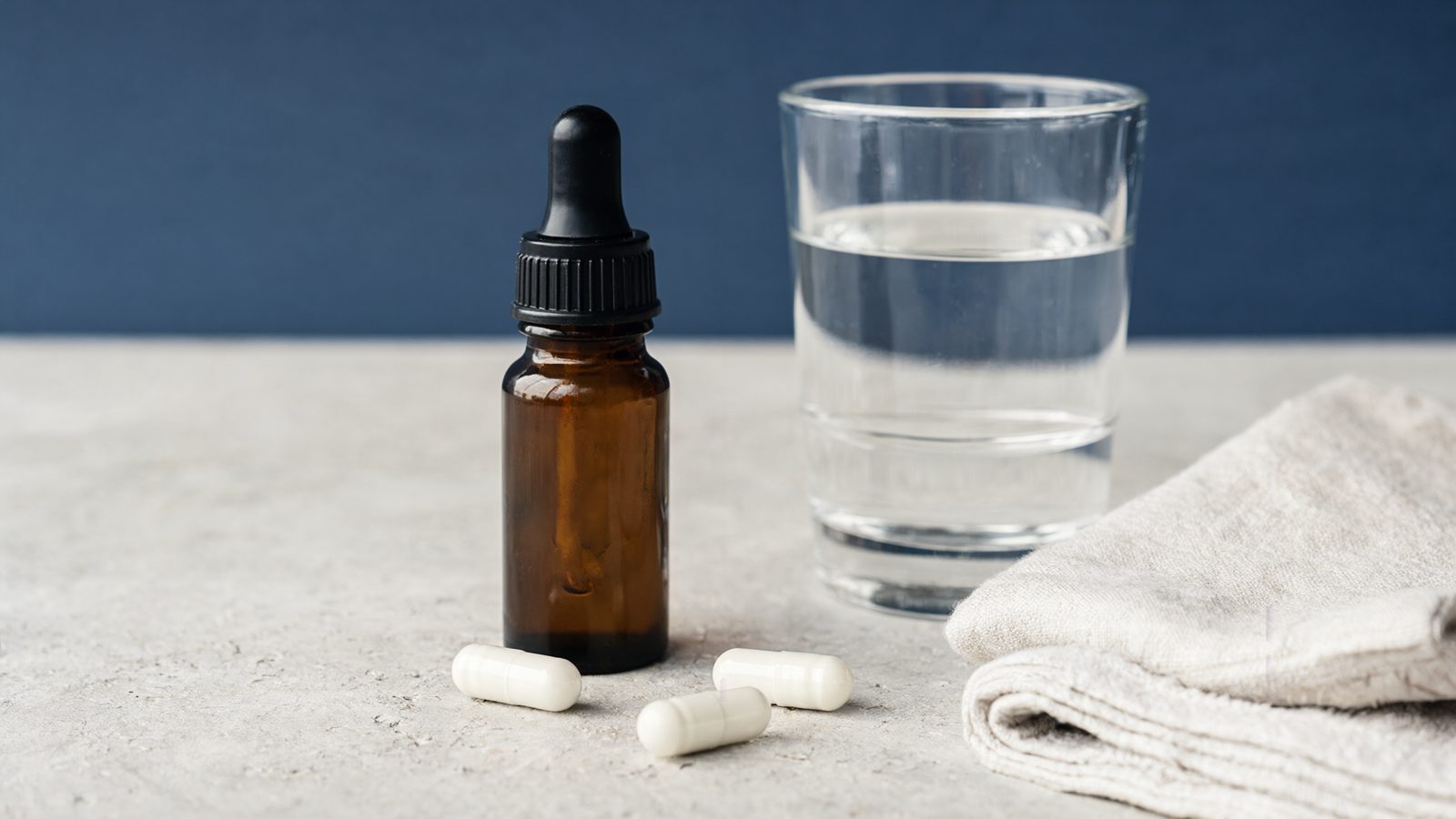
Blue or green urine is the one effect nearly everyone gets. It can look alarming the first time, but it only means the dye is leaving your body, and it is one of the methylene blue side effects that needs no action. Staining in the mouth is the main reason many people move from the 1% liquid to capsules: Eternal Elixir’s Methylene Blue Liquid 1% USP gives 500 mcg per drop and 10 mg per full dropper, while a capsule delivers the same 10 mg without touching your teeth.
If you are still comparing formats and brands, the Eternal Elixir methylene blue supplement comparison walks through drops against capsules, USP grade and label testing in more depth.
The Serious Risk: Serotonin Toxicity With Antidepressants
The reason methylene blue needs more care than most supplements is enzyme chemistry. A laboratory study using purified human enzyme found that methylene blue is a potent, reversible inhibitor of monoamine oxidase A, the enzyme that breaks down serotonin, and a much weaker inhibitor of monoamine oxidase B (Ramsay et al., British Journal of Pharmacology, 2007). Drugs that block this enzyme are known to cause serotonin toxicity when they meet serotonin reuptake inhibitors, and the authors concluded that this mechanism explains the reactions seen in patients on SSRIs who received methylene blue.
The clinical record backs this up. A review of central nervous system reactions found that 13 of 14 reported cases met the Hunter criteria for serotonin toxicity, with intravenous doses in hospital use ranging from 1 to 7.5 mg per kilogram of body weight (Gillman, Journal of Psychopharmacology, 2011). The same review noted that an intravenous dose of 0.75 mg/kg produced a peak blood level high enough to block the enzyme, and that severe toxicity had occurred at 1 mg/kg.
A later systematic review collected 50 separate cases of methylene blue serotonin syndrome from 23 publications. Every one of those 50 patients was also taking a serotonergic antidepressant, all had received methylene blue by injection, symptoms ranged from mild to severe, and one person died.
The authors then reported a new case in which an oral urinary product containing methylene blue appears to have triggered the syndrome in a patient on several serotonergic drugs (Zuschlag et al., Psychosomatics, 2018). That oral case is why we regard the antidepressant interaction as a firm stop sign at any dose.
Medicines to discuss with your prescriber before using methylene blue include SSRIs, SNRIs, clomipramine and other serotonergic antidepressants, other MAO inhibitors, and any prescription or supplement you take to raise serotonin. Warning signs of serotonin toxicity include restlessness or confusion, heavy sweating, shivering or tremor, muscle twitching, a racing heart and a rising temperature. If they appear after a dose, get emergency help.
Trying methylene blue in the US? Eternal Elixir’s Methylene Blue Capsules 10mg USP ships fast across the United States with 60 capsules per bottle. Browse the longevity range →
Your 10 mg Capsule in Clinical Terms: A Dose-Context Table
Most articles on methylene blue side effects quote hospital case reports without asking how those doses compare with a supplement. The numbers below put a 10 mg oral capsule on the same per-kilogram scale the clinical literature uses. Oral absorption is high but not complete: in 16 healthy adults, about 72% of an oral dose reached the bloodstream on average, with wide variation between people (Walter-Sack et al., European Journal of Clinical Pharmacology, 2009).
| Body weight | 10 mg capsule (mg/kg) | Absorbed at 72% (mg/kg) | IV dose at 0.75 mg/kg | IV dose at 1 mg/kg |
|---|---|---|---|---|
| 132 lb (60 kg) | 0.17 | 0.12 | 45 mg | 60 mg |
| 154 lb (70 kg) | 0.14 | 0.10 | 52.5 mg | 70 mg |
| 198 lb (90 kg) | 0.11 | 0.08 | 67.5 mg | 90 mg |
For a 154 lb adult, one Eternal Elixir capsule delivers roughly a seventh of the amount that reached enzyme-blocking blood levels by vein, and a seventh or less of the dose tied to severe reactions. Two cautions keep this table honest. First, a peak level after an injection is higher and faster than the slower rise after a capsule, so this is a rough exposure comparison and the safety threshold for oral use has not been established.
Second, the oral case above shows that interactions are possible outside the hospital, so the table does not make combining methylene blue with antidepressants acceptable. It does explain why, for healthy people who take no serotonergic medicines, the methylene blue side effects reported at this dose are mostly color changes. For how much people take and how the 10 mg figure was chosen, see our methylene blue dosage guide.
G6PD Deficiency, Pregnancy and Other Reasons to Skip It
Serotonin is the headline interaction, but it is only one of several reasons to pass on methylene blue.
G6PD deficiency. This inherited enzyme shortfall leaves red blood cells vulnerable to oxidative stress. A pooled analysis of four trials in West African children found that methylene blue at 15 mg/kg per day lowered hemoglobin in children with full G6PD deficiency, and two episodes of hemolysis occurred among 1,005 children, both in children who had received methylene blue (Müller et al., Pharmacoepidemiology and Drug Safety, 2013).
That dose is roughly a hundred times a 10 mg capsule for an adult, and the authors judged the effect of limited clinical relevance in that setting. Even so, if you know or suspect you have G6PD deficiency, avoid methylene blue unless your doctor says otherwise.
Pregnancy and breastfeeding. The safety of methylene blue supplements in pregnancy and while nursing has not been established, so skip it during both.
Upcoming surgery or procedures. Methylene blue can make a pulse oximeter read lower than your true oxygen level, and some drugs used around surgery have serotonin activity. Tell the team you take it and ask when to stop.
Kidney problems. The kidneys clear the dye, which is why urine turns blue. If you have reduced kidney function, ask your clinician before starting.
How to Lower Your Risk of Methylene Blue Side Effects
If none of the exclusions above apply to you, a few habits keep methylene blue side effects small.
- Check every medicine and supplement first. Run your full list past a pharmacist with the serotonin interaction in mind, including cough and pain products.
- Use a fixed dose. Each Eternal Elixir capsule holds 10 mg of USP-grade methylene blue with 10 mg of vitamin C, one capsule per serving, which removes the drop-counting errors that come with a dropper bottle.
- Take it with food and water. This is the simplest way to reduce nausea.
- Do not stack forms. Taking drops and capsules on the same day makes it easy to double your intake without noticing.
- Stop and reassess if you notice anything beyond color changes, and get urgent care for any sign of serotonin toxicity.
The capsules cost $59.99 for 60 capsules, which works out to $1.00 per 10 mg serving at the current price. Read the full label or order on the Methylene Blue Capsules 10mg USP page. If methylene blue is not a fit because of your medicines, the other options in our roundup of supplements people use for brain fog work through different pathways. Every supplement carries some tradeoff, and our review of ginseng side effects takes the same evidence-first approach to an adaptogen.
Methylene Blue Side Effects FAQ
Is methylene blue toxic to humans?
Toxicity depends on dose and on what else you take. Hospitals give methylene blue by injection at 1 to 7.5 mg/kg, and the serious reactions on record are mostly serotonin toxicity in people also on serotonergic antidepressants. A 10 mg oral capsule is far below those doses, but people with G6PD deficiency and anyone on serotonergic medicines should avoid it.
Why do I feel weird after taking methylene blue?
Controlled data on how low doses feel are limited, so first rule out an interaction. Restlessness, sweating, shaking, confusion or a racing heart can be early serotonin toxicity, especially if you take an antidepressant, and need urgent care. Milder feelings such as a headache or queasiness often settle when you take it with food, and stopping is reasonable if they do not.
Is methylene blue a prescription drug?
Injectable methylene blue is a hospital medicine given by clinicians. Oral methylene blue is also sold as a dietary supplement in low-dose capsules and 1% solutions such as the Eternal Elixir range. The supplement form still carries the same interaction risk, so handle it with the care you would give a medicine.
Can methylene blue affect a pulse oximeter reading?
Yes. The dye absorbs light at the wavelengths fingertip oximeters use, so readings can look falsely low after a dose. Tell any clinician or surgical team that you take methylene blue before a procedure, along with any antidepressants you use, since both matter for anesthesia planning.
What are the warning signs of serotonin toxicity from methylene blue?
Watch for agitation or confusion, heavy sweating, shivering, tremor or muscle twitching, a fast heartbeat and a rising temperature, usually within hours of a dose. These are the methylene blue side effects that need emergency care, and the risk is highest if you also take an SSRI, SNRI or other serotonergic medicine. Our dosage guide covers how to time a dose around other medicines.
Ready to start your longevity stack?
Full-size bottles · Fast US shipping · Third-party tested
Shop Eternal Elixir →Recommended for you
About Eternal Elixir
Eternal Elixir is a supplement company specializing in longevity and nootropic formulations. All products are third-party tested for purity, manufactured under strict quality controls, and ship fast across the United States. Browse the full range at eternalelixir.com/shop.
Sources
- Ramsay RR, Dunford C, Gillman PK. Methylene blue and serotonin toxicity: inhibition of monoamine oxidase A (MAO A) confirms a theoretical prediction. British Journal of Pharmacology. 2007. PMID 17721552
- Gillman PK. CNS toxicity involving methylene blue: the exemplar for understanding and predicting drug interactions that precipitate serotonin toxicity. Journal of Psychopharmacology. 2011. PMID 20142303
- Zuschlag ZD, Warren MW, Schultz SK. Serotonin toxicity and urinary analgesics: a case report and systematic literature review of methylene blue-induced serotonin syndrome. Psychosomatics. 2018. PMID 30104021
- Walter-Sack I, et al. High absolute bioavailability of methylene blue given as an aqueous oral formulation. European Journal of Clinical Pharmacology. 2009. PMID 18810398
- Müller O, et al. […] risk with methylene blue […] in G6PD-sufficient and G6PD-deficient West-African children […]: a synopsis of four RCTs. Pharmacoepidemiology and Drug Safety. 2013. PMID 23135803