Last updated: · Published by Eternal Elixir
The best autophagy supplements are the ones with a named compound, a dose you can read off the label, and human or clearly labelled animal evidence behind the mechanism. Our pick for most US buyers is Eternal Elixir Spermidine 10mg, because spermidine is the autophagy compound with the most direct mechanistic story and a clean, single-ingredient label at $0.83 per capsule. Eternal Elixir makes Spermidine 10mg, and it is our pick on this list.
Disclosure: Eternal Elixir makes and sells supplements. When our own products appear in a comparison, they are named as Eternal Elixir products. No brand pays to be included. Our editorial standards
Autophagy is the cell’s recycling process: it breaks down damaged components and reuses the parts. It is a normal, constant process in healthy cells, and it responds to things like fasting and exercise. Supplements do not switch it on from nothing. They support the pathways that regulate it.
If you want the mechanism first, start with our spermidine benefits overview, then come back to this best autophagy supplements roundup.
That distinction matters, because it is where most marketing overreach happens.
Quick answer: the supplements studied for autophagy support are spermidine, urolithin A, resveratrol, and to a lesser degree berberine. Spermidine has the most direct autophagy induction data, urolithin A has the strongest mitophagy-specific human trial, and resveratrol has the widest research base with mixed human results. Pick based on which mechanism you want to support, rather than on which bottle has the most ingredients.
Best autophagy supplements compared
The table below ranks the options we would actually recommend, with our product first. Eternal Elixir figures come from our own labels and are dated as of Oct 2026. Competitor prices change, so check the live page before you order.
| Rank | Product | Compound | Dose per serve | Pack size | Price | Cost per day | Buy |
|---|---|---|---|---|---|---|---|
| 1 | Eternal Elixir Spermidine 10mg | Spermidine | 10 mg | 60 capsules | $49.99 | $0.83 | View product |
| 2 | Primeadine Spermidine | Spermidine (wheat germ extract) | 1 mg per serving | 90 capsules | See live page | See live page | Retailer page |
| 3 | Timeline Urolithin A | Urolithin A | 500 mg | 60 softgels | See live page | See live page | Retailer page |
| 4 | Eternal Elixir Trans-Resveratrol 600mg | Trans-resveratrol | 600 mg | 90 capsules | $59.99 | $0.67 | View product |
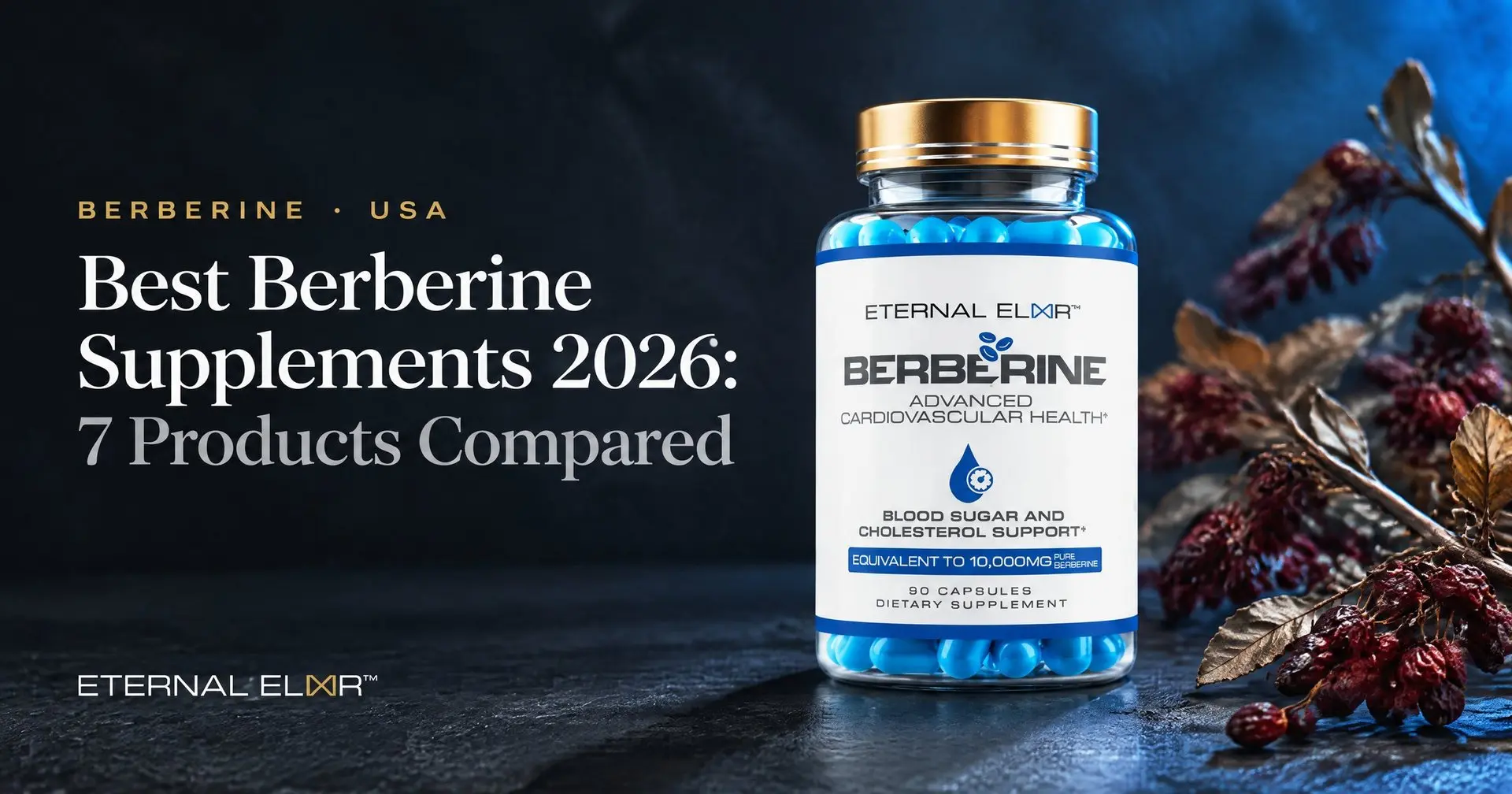
| 5 | Eternal Elixir Berberine HCl 500mg | Berberine HCl 20:1 extract | 500 mg | 90 capsules | $49.99 | $0.56 | View product |
We keep the table short on purpose. There are dozens of autophagy-adjacent products on the US market, but most of them either bury a small dose of spermidine inside a blend or sell a compound whose human data is thin. These five are the ones with a readable dose and a mechanism worth knowing about.
Add Spermidine 10mg to cart · $49.99
How we ranked these supplements (best autophagy supplements)
We ranked on four things, in this order. First, whether the product names a single compound and states its dose per serving, so you can compare it to the doses used in research. Second, whether there is human trial data for that compound, or animal data where human data does not yet exist, and whether the brand is honest about which is which. Third, cost per serve, because autophagy support is a long-game purchase and a $3-a-day capsule has to earn its place.
Fourth, label transparency, meaning no proprietary blends hiding the dose. That is why this best autophagy supplements shortlist stays dose-transparent.
We did not rank on review counts, awards, or how many ingredients a formula contains. More ingredients is usually worse, because it means smaller doses of each. Our own product sits first because we make it and we know the label, and we say so plainly rather than pretending the list is independent.
The evidence hierarchy matters here. Spermidine has direct autophagy induction data, much of it in animal and cell models with growing human observational work. Urolithin A has a small human trial measuring mitophagy markers. Resveratrol has a large human literature but its autophagy-specific human data is limited.
Berberine has mechanistic and metabolic data, with autophagy effects shown mostly in cells and animals. None of these compounds has been shown to extend human lifespan in a randomized trial, and any brand implying otherwise is ahead of the data.
1. Eternal Elixir Spermidine 10mg — our pick (best autophagy supplements)
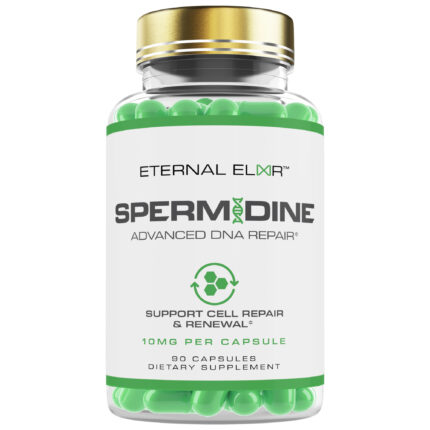
Eternal Elixir makes Spermidine 10mg, and it is our pick for most people because it is a single-ingredient capsule with a stated dose, and no blend. Each capsule carries 10 mg of spermidine, one capsule is one serving, and a bottle holds 60 capsules, so a bottle lasts 60 days at $0.83 per day. The label reference is 1 capsule per serving.
Spermidine is a polyamine found in wheat germ, aged cheese, mushrooms, and soy. It is the compound with the most direct autophagy story: cell and animal studies show it induces autophagy through pathways that overlap with the cell’s nutrient-sensing machinery. Human data is growing but still mostly observational, linking higher dietary polyamine intake with various health markers rather than proving an effect of a capsule. We state that limit on the label page and here.
Pros: single ingredient, dose stated per capsule, 60 servings per bottle, no proprietary blend.
Cons: human trial data on spermidine supplements specifically is thinner than the animal literature, and the 10 mg dose is higher than some food-based spermidine products, so buyers comparing against a 1 mg serving should note the difference.
Best for: anyone who wants a clean, single-compound spermidine product at a dose they can compare to research.
Who it does not suit: if you want a formula that combines several autophagy-adjacent compounds in one capsule, this is not that. It is one compound, done plainly. If you are already eating a polyamine-rich diet and want to avoid doubling up, talk to your doctor about whether an added 10 mg is worth it for you.
2. Primeadine Spermidine — the wheat-germ option
Primeadine is a spermidine product built on wheat germ extract, sold in the US through its own site and specialist retailers. It provides 1 mg of spermidine per daily serving, which is a food-equivalent level rather than a concentrated dose. The brand positions it around a “spermidine from wheat germ” story rather than a high-dose one.
The 1 mg dose is the key practical difference from our pick. If you are comparing cost per milligram rather than cost per capsule, a 1 mg serving and a 10 mg capsule are not the same purchase even if the bottle prices look similar. Read the label for the spermidine content per serving and multiply out before you decide.
Pros: wheat-germ-derived spermidine, a food-forward positioning, a well-known name in the spermidine category.
Cons: lower spermidine dose per serving than our pick, so you may need more capsules per day to match a higher dose, and the price per milligram is higher than a concentrated single-ingredient product.
Best for: buyers who specifically want spermidine from a wheat germ source and are comfortable with a food-level dose per serving.
Who it does not suit: anyone who wants a high dose per capsule or the lowest cost per milligram. Check the live page for the current price and capsule count before ordering, since these change.
3. Timeline Urolithin A — the mitophagy option
Timeline sells urolithin A, a metabolite your gut bacteria produce from ellagitannins in pomegranates, berries, and nuts. Urolithin A is studied specifically for mitophagy, which is the selective cleanup of damaged mitochondria. That is a narrower and more specific mechanism than general autophagy, and it is the reason this compound gets attention.
Timeline’s product is dosed at 500 mg of urolithin A per two-softgel daily serving, in a 60-softgel pack. That dose matches the level used in the human trial work on urolithin A, which is a point in its favour: the dose on the label is the dose researchers studied. The human trial data is small, but it measured mitophagy markers directly rather than relying on animal extrapolation.
Pros: a specific mitophagy mechanism, a 500 mg dose that matches the research, human trial data measuring mitophagy markers.
Cons: the highest cost per serve on this list, a 60-softgel pack lasts 30 days, and the human evidence base is small.
Best for: buyers who specifically want to support mitophagy, or who have already tried spermidine and want a different mechanism.
Who it does not suit: anyone on a tight per-day budget, or anyone who wants the broadest research base rather than the most specific mechanism. Urolithin A is a mitochondrial compound rather than a general autophagy one. If that distinction does not matter to you, spermidine is the cheaper place to start. See also our note on resveratrol interactions if you stack polyphenols with the best autophagy supplements on this list.
4. Eternal Elixir Trans-Resveratrol 600mg — the research-depth option
Eternal Elixir’s Trans-Resveratrol 600mg is a single-ingredient polyphenol capsule at 600 mg trans-resveratrol per serving, 90 capsules per bottle, $0.67 per day. Resveratrol has by far the largest human research literature of any compound on this list, though most of that research is about metabolic and vascular markers rather than autophagy specifically.
The autophagy connection for resveratrol comes largely from cell and animal work showing it interacts with the same nutrient-sensing pathways spermidine touches. In humans, the evidence for resveratrol is strongest for metabolic markers, mixed for vascular outcomes, and thin for autophagy as a measured endpoint. We list it fourth because the autophagy-specific human data does not yet match the size of its general research base.
Pros: the widest human safety and trial literature on this list, a clearly stated 600 mg trans-resveratrol dose, single ingredient.
Cons: autophagy-specific human data is limited, and results across human trials are mixed. It is a polyphenol rather than an autophagy inducer with a direct human readout.
Best for: buyers who want the compound with the most human research behind it and are comfortable that the autophagy link is mostly mechanistic.
Who it does not suit: anyone who wants a compound with a direct autophagy or mitophagy human trial. For that, spermidine or urolithin A fit better. If you take blood-thinning medication, talk to your doctor before adding resveratrol, as it has documented antiplatelet activity in laboratory work.
For the full picture on this molecule, our Trans-Resveratrol 600mg product page lists the label and serving details.
5. Eternal Elixir Berberine HCl 500mg — the metabolic angle
Berberine is a plant alkaloid studied mainly for metabolic markers, and its autophagy connection comes from cell and animal work showing it interacts with nutrient-sensing pathways. Eternal Elixir’s Berberine HCl 500mg is a 20:1 extract, 500 mg per capsule, 90 capsules per bottle, $0.56 per day. It is the cheapest per day on this list.
We rank it fifth because its autophagy evidence is the least direct of the five. The human data on berberine is mostly about metabolic endpoints, and the autophagy findings are largely mechanistic. That does not make it a bad buy, it makes it a compound to choose for metabolic support first and autophagy second.
Pros: low cost per day, a stated 500 mg dose of a 20:1 extract, a large mechanistic literature.
Cons: autophagy-specific human data is limited, and berberine can interact with some medications, so a conversation with your doctor is worth having.
Best for: buyers who want metabolic support and are comfortable with autophagy as a secondary, mechanistic rationale.
Who it does not suit: anyone looking for a compound with a direct autophagy human trial. If you take prescription medication, particularly for blood sugar or liver processing, check with your pharmacist before adding berberine.
If you want to see how berberine fits alongside our other metabolic and longevity products, browse the Berberine HCl 500mg product page for the full label.
What the research actually shows
Spermidine and autophagy
Spermidine is the most studied dietary polyamine for autophagy induction. Cell and animal studies show it activates autophagy through pathways that overlap with AMPK and inhibit mTOR, the cell’s growth-signaling hub that suppresses autophagy when nutrients are plentiful. Those are mechanistic findings, and they are consistent across labs. Human trial data on spermidine supplements is smaller, since observational work links higher polyamine intake with health markers, but randomized trials measuring autophagy in people are few.
We state that limit rather than paper over it.
Urolithin A and mitophagy
Urolithin A has the most specific human data of the group. A small randomized human trial measured mitophagy markers and reported changes in mitochondrial function readouts. The trial was small and short, so the finding is suggestive rather than definitive, but it is a direct human measurement rather than an animal extrapolation. That is why it earns a high rank despite its cost.
Resveratrol and the nutrient-sensing pathways
Resveratrol’s autophagy link is mechanistic. Cell and animal work shows it interacts with sirtuin and AMPK pathways, both of which influence autophagy regulation. Human trials have focused on metabolic and vascular markers rather than autophagy itself, and results have been mixed. The honest summary is that resveratrol has a plausible mechanism and a large safety record, but no direct human autophagy readout.
Berberine and metabolic pathways
Berberine’s autophagy findings are mostly from cell and animal models, where it has been shown to influence AMPK signaling. Human trials have concentrated on metabolic endpoints. As with resveratrol, the autophagy case rests on mechanism rather than a direct human trial measuring autophagy.
What none of these has been shown to do
None of these supplements has been shown to extend human lifespan in a randomized trial. What the evidence supports is that these compounds influence the pathways that regulate autophagy and mitochondrial cleanup in laboratory and animal models, with small human trials in some cases measuring related markers. That is a real but modest claim, and we hold our own products to it.
These products are not intended to diagnose, treat, cure, or prevent any disease.
Who should take an autophagy supplement, and who should not
Autophagy supplements suit people who already have the basics in place: a diet with enough protein and plant foods, regular exercise, and a sleep schedule that is not chaotic. Supplements support those foundations rather than replacing them. Exercise and fasting are the two lifestyle levers with the clearest human evidence for influencing autophagy, and a capsule on top of a poor routine is unlikely to move much.
They do not suit everyone. If you are pregnant or breastfeeding, none of these compounds has enough human pregnancy data for us to recommend it without your doctor’s input. If you take prescription medication, particularly blood thinners or blood-sugar medication, check with your pharmacist before adding resveratrol or berberine. If you are already eating a polyamine-rich diet and want to avoid doubling up, ask your doctor whether an added spermidine dose is worth it for you.
If you want a single place to start, spermidine is the compound with the most direct autophagy story. If you want a different mechanism, urolithin A is the mitophagy option. If you want the widest research base, resveratrol is the one with the most human data, autophagy-specific caveats included.
Further reading from Eternal Elixir
Each compound on this list has its own deeper guide on the Eternal Elixir blog. If spermidine is your starting point, our spermidine benefits guide walks through the research in more detail, and the spermidine-rich foods list shows how much you get from wheat germ, aged cheese, mushrooms and soy before you add a capsule.
If you are weighing resveratrol, the resveratrol interactions guide covers what to check with your clinician first. For berberine, our guide on when to take berberine explains timing around meals and how people usually build up the dose.
If you want the wider context, the Eternal Elixir roundup of the best mitochondrial supplements compares products that target the mitochondria directly, and our longevity supplement stacks guide shows how single ingredients like these can sit together in one routine. Reading those alongside this list helps you choose one compound at a time, which is the easiest way to tell what is actually working for you.
A simple plan many readers follow is to start with one product for eight to twelve weeks, keep a short note on sleep, energy and training recovery, and only then decide whether to add a second compound. Eternal Elixir lists the dose, capsule count and cost per day on every product page so that comparison stays easy.
How to read a spermidine or urolithin A label
The label is where most autophagy products either earn trust or lose it. Look for the compound name and the dose per serving, in milligrams, on the front or the supplement facts panel. If the dose is hidden inside a “proprietary blend” with no breakdown, you cannot compare it to research doses, and that is a reason to skip it.
Check the serving size against the capsule count. A bottle that says 90 capsules can be 90 servings or 30 servings depending on whether the label asks for one, two, or three capsules a day. Divide the bottle price by the number of servings, not the number of capsules, to get a true cost per day.
For spermidine, the dose range in the market runs from about 1 mg per serving in food-based wheat germ products to 10 mg or more in concentrated single-ingredient capsules. Neither is wrong, but they are different purchases, and the cost per milligram is the honest comparison. For urolithin A, 500 mg per daily serving is the dose used in the published human work, so a product that lists less than that is not a like-for-like swap.
Finally, look for a stated source and a stated form. Wheat germ extract, fermented spermidine, and synthetic spermidine are all sold, and trans-resveratrol is not the same as a generic resveratrol blend. If the label does not tell you which one you are getting, ask before you buy.
Frequently asked questions
What supplements stimulate autophagy?
The compounds most studied for autophagy support are spermidine, urolithin A, and resveratrol, with berberine studied to a lesser degree. Spermidine has the most direct autophagy induction data, urolithin A has the most specific mitophagy human trial, and resveratrol has the widest general research base with mixed human results. None of them switches autophagy on from nothing, they support the pathways that regulate it.
Does exercise promote autophagy?
Exercise is one of the best-studied lifestyle levers for autophagy. Human and animal work shows that exercise influences the same nutrient-sensing pathways that regulate autophagy, particularly AMPK. That makes exercise a foundation for any supplement routine rather than a replacement for one. If you are not exercising regularly, adding a capsule is unlikely to compensate.
Will vitamins disrupt autophagy?
Some vitamins and antioxidants have been studied for their effect on autophagy, and the picture is mixed. High-dose antioxidant supplementation has been suggested in some research to blunt the signaling that exercise and fasting use to trigger autophagy, though the evidence is not settled. The practical takeaway is that a standard multivitamin is unlikely to matter much, while very high-dose antioxidant stacks are worth a conversation with your doctor if autophagy support is your goal.
What diseases are linked to autophagy?
Autophagy has been studied in relation to many conditions, including metabolic, neurodegenerative, and age-related ones. The key point for supplement buyers is that autophagy is a normal cellular process, and these supplements support it. If you have a diagnosed condition, talk to your doctor about whether an autophagy supplement fits your situation.
How often should you do a 3 day fast for autophagy?
There is no single agreed schedule. Fasting research suggests that longer fasts influence autophagy-related pathways more than short ones, and a 3-day fast is often used in research settings. How often you do one depends on your goals, your health, and your tolerance. Talk to your doctor before trying extended fasts, especially if you take medication or have a condition affected by fasting.
What’s the best vitamin to take while fasting?
There is no single best vitamin for fasting. Some people take electrolytes and a multivitamin, others avoid high-dose antioxidants during a fast to avoid blunting the signaling that fasting triggers. The honest answer is that it depends on your goals and your doctor’s advice. If you are fasting for autophagy specifically, keep antioxidant doses modest and focus on hydration and electrolytes.
Add Spermidine 10mg to cart · $49.99
The bottom line
The best autophagy supplement for most US buyers is a single-ingredient spermidine product with a stated dose and a low cost per day, which is why Eternal Elixir Spermidine 10mg sits first on this list. If you want a mitophagy-specific option, urolithin A is the one with a direct human trial. If you want the widest research base, resveratrol has the most human data, with the caveat that its autophagy link is mostly mechanistic. Berberine is a reasonable metabolic-first choice at the lowest cost per day.
Whichever you pick, remember what the evidence supports: these compounds influence the pathways that regulate autophagy, and the foundations of exercise, diet, and sleep do the rest. Eternal Elixir makes Spermidine 10mg, Resveratrol 600mg, and Berberine HCl 500mg. They are our picks, and we say so plainly.
Sources
- Eisenberg T, et al. Induction of autophagy by spermidine promotes longevity. Nature Cell Biology, 2009. PubMed
- Madeo F, et al. Spermidine: a physiological autophagy inducer acting as an anti-aging vitamin in humans? Autophagy, 2019.
- Ryu D, et al. Urolithin A induces mitophagy and prolongs lifespan in C. elegans and increases muscle function in rodents. Nature Medicine, 2016.
- Andreux PA, et al. The mitophagy activator urolithin A is safe and induces a molecular signature of improved mitochondrial and cellular health in humans. Nature Metabolism, 2019.
- Baur JA, et al. Resveratrol improves health and survival of mice on a high-calorie diet. Nature, 2006.