Soften
Tallow + coconut oil
Two lipid ingredients create the rich, spreadable emollient base.

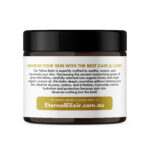
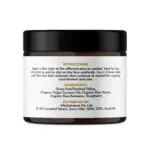
Inside the formula
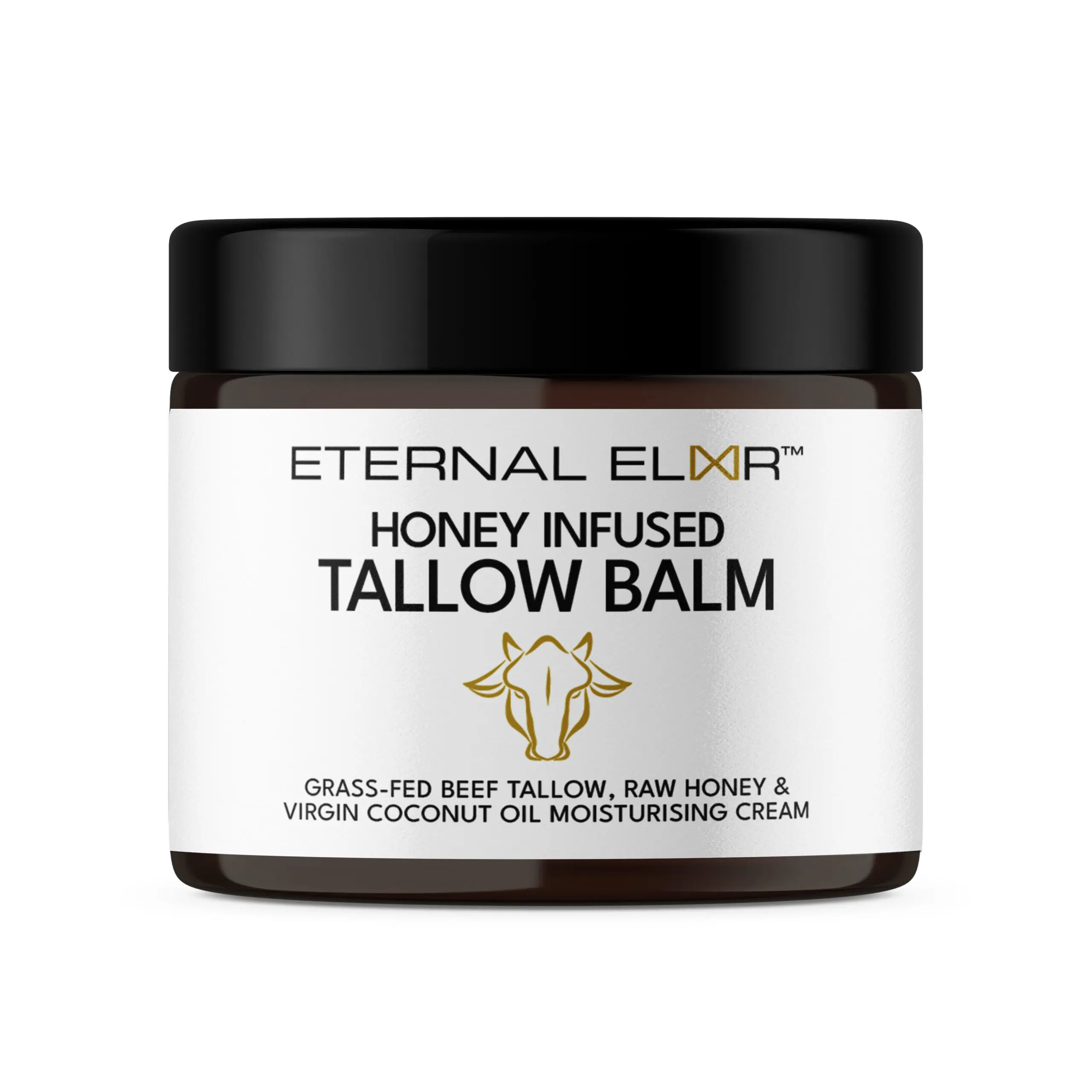
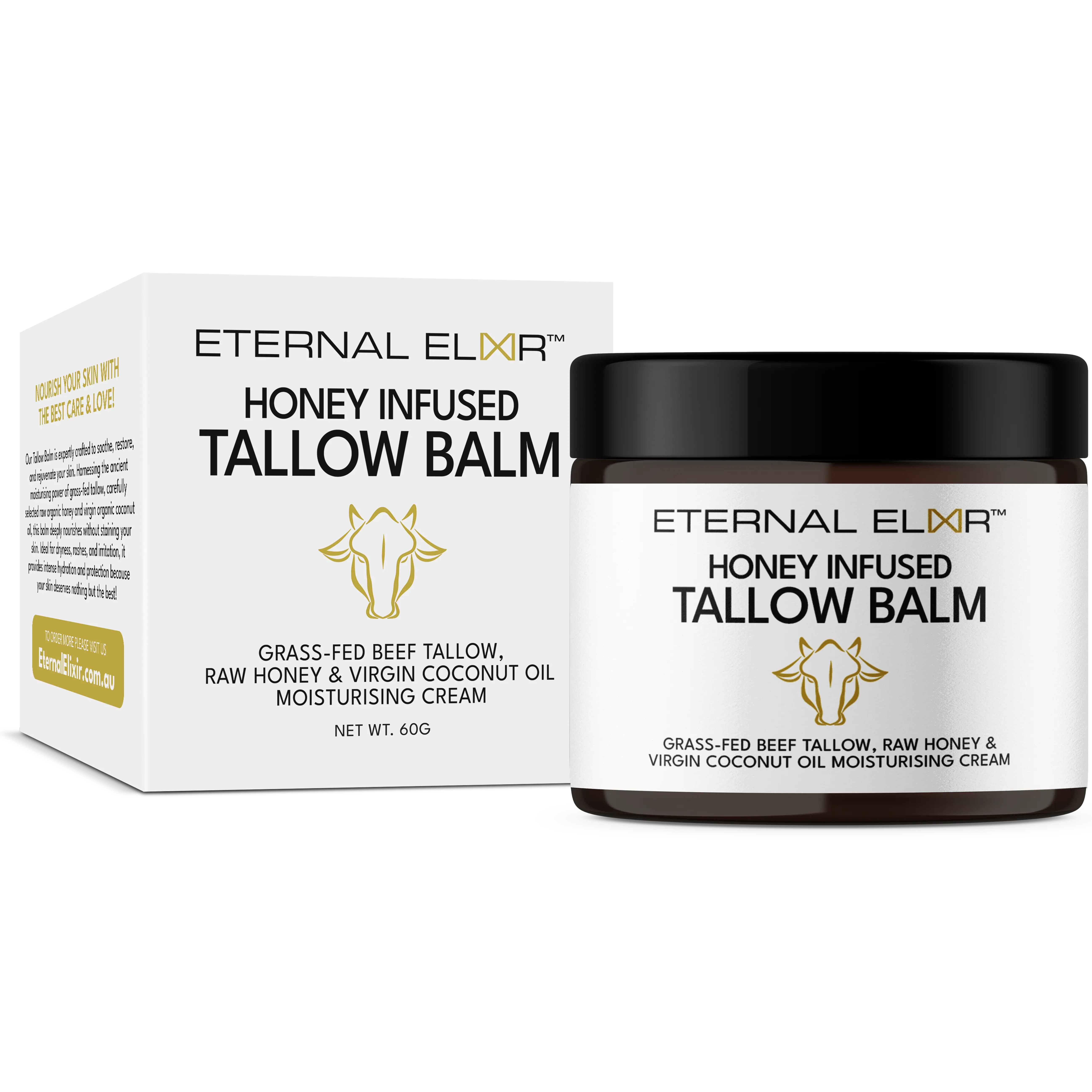
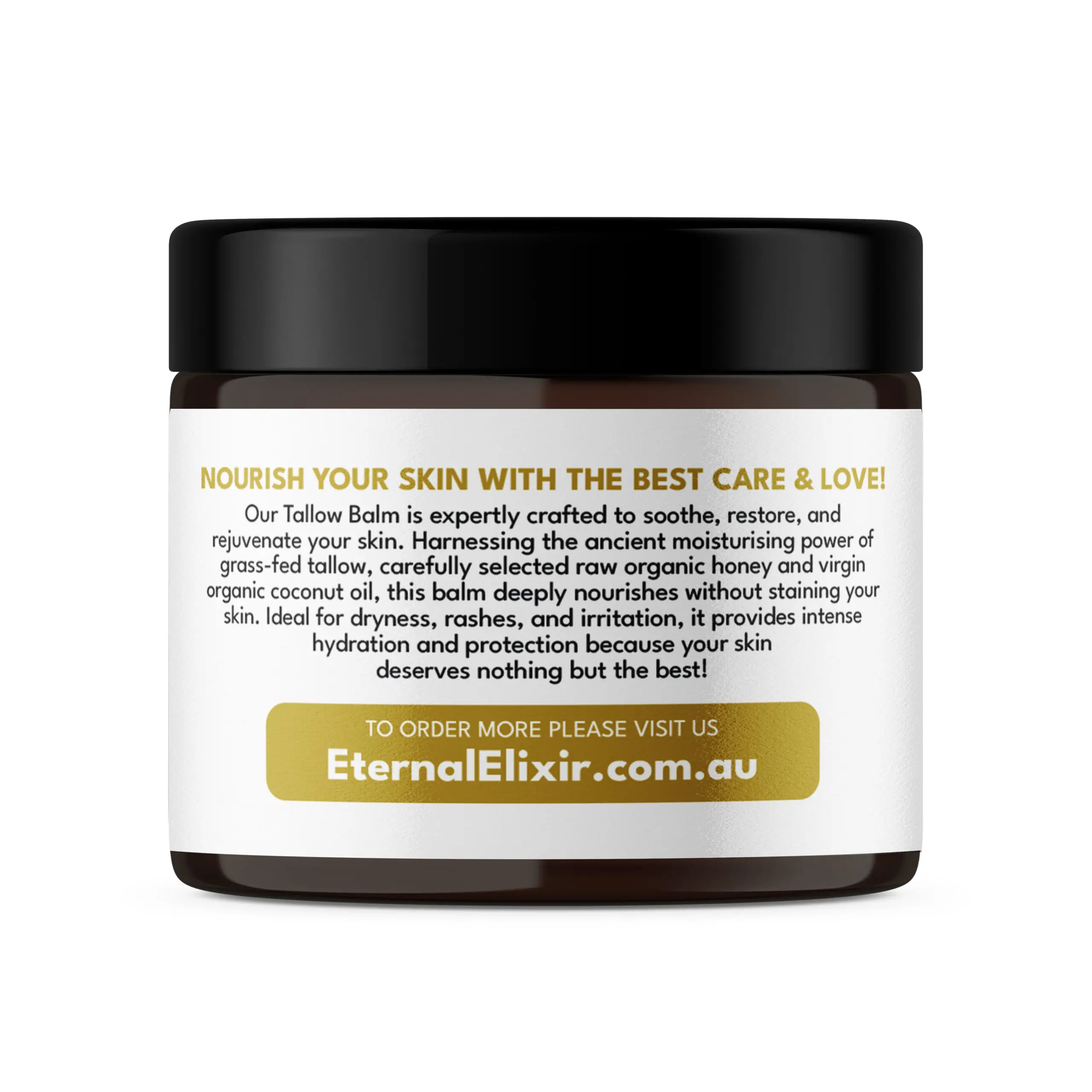
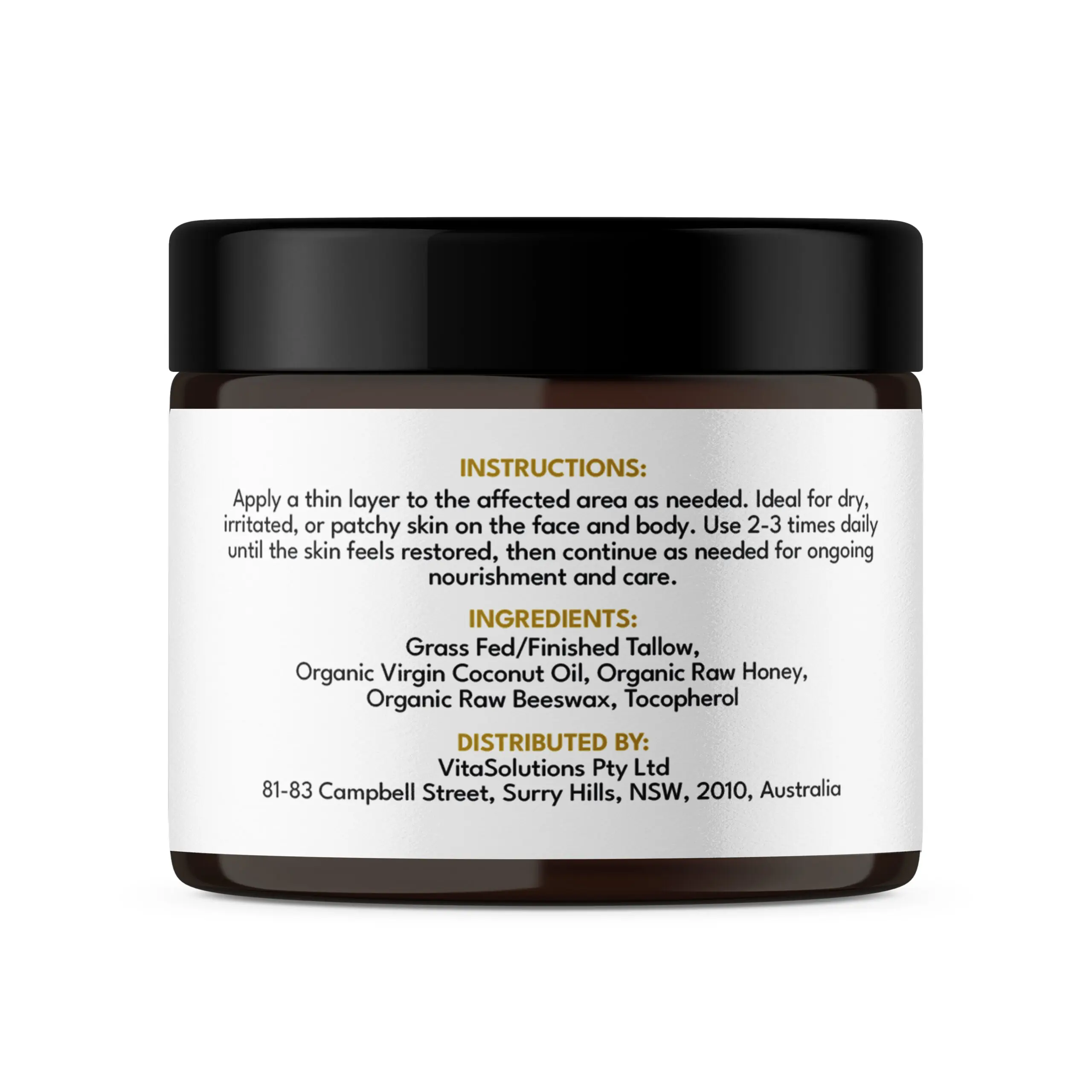
This balm’s story is physical as much as botanical: tallow and coconut oil provide the emollient base, honey is a humectant, beeswax builds structure and an occlusive film, and tocopherol supports oil-phase stability.
Soften
Two lipid ingredients create the rich, spreadable emollient base.
Hold
Honey attracts water while beeswax adds structure and helps reduce moisture loss.
Protect the formula
Vitamin E functions primarily as an antioxidant for the balm’s oil phase.
Human/preclinical literature · scoping review
The emollient base
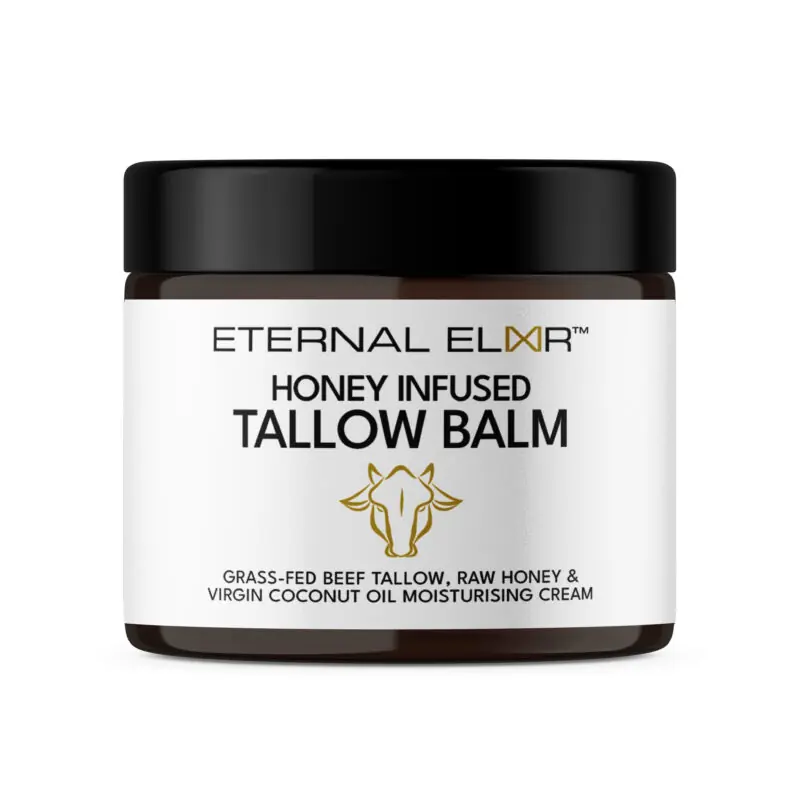
Rendered beef fat · grass-fed and finished source claim
What it is: Tallow is rendered animal fat rich in triglycerides and fatty acids. In a balm, it supplies body, slip and an occlusive emollient layer.
Evidence context: A 2024 scoping review found the topical tallow literature limited and heterogeneous. It did not validate sweeping treatment or “skin-identical” claims.
Tallow forms the primary lipid base that carries the other oil-compatible ingredients and gives the balm its rich texture.
Human evidence · condition-specific trial
The lighter emollient
Organic virgin coconut oil
What it is: Coconut oil is a semi-solid plant lipid rich in medium-chain fatty acids. Topically it contributes glide and helps soften the skin surface.
Evidence context: A randomized trial in children with mild-to-moderate atopic dermatitis compared virgin coconut oil with mineral oil. That clinical context is not a blanket treatment claim for this balm.
Coconut oil loosens the denser tallow base and helps the balm spread more easily at skin temperature.
Human evidence · systematic review context
The humectant
Organic raw honey
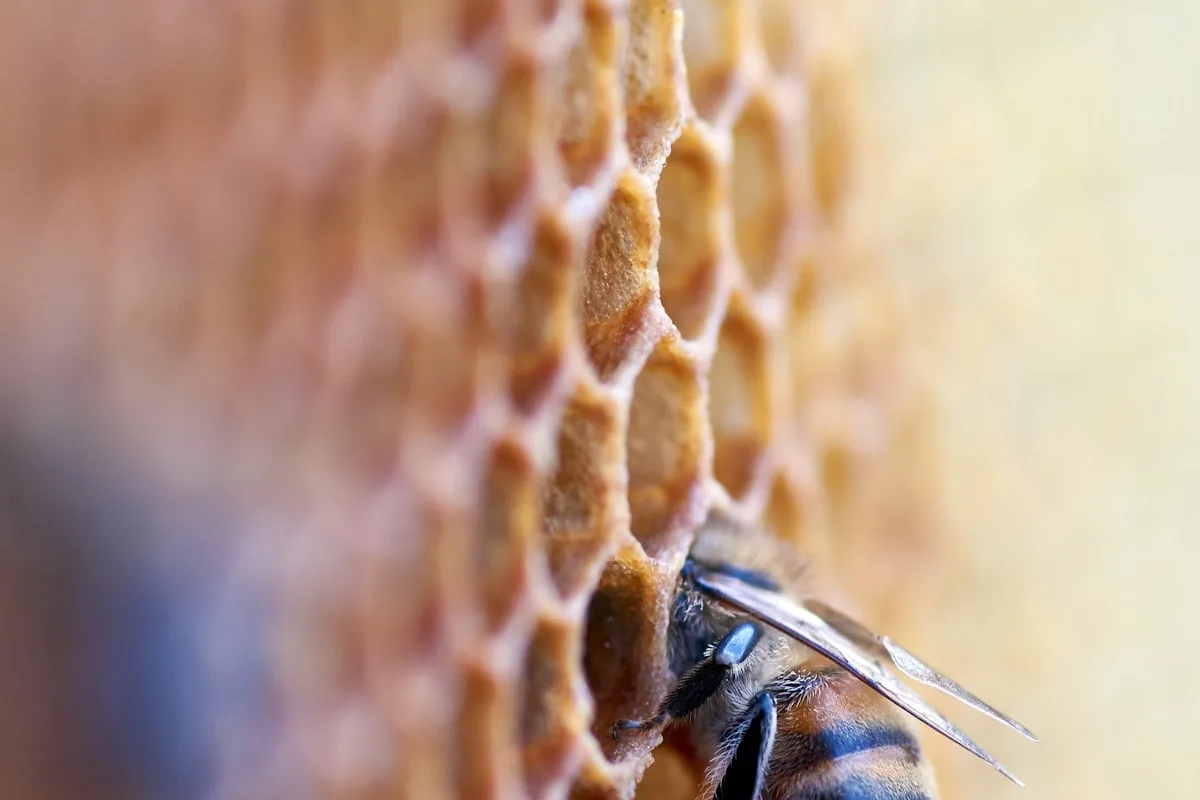
What it is: Honey is a sugar-rich natural material with humectant properties, meaning it can attract and retain water in a topical formula.
Evidence context: Medical-honey wound literature uses specialized products and protocols. It should not be transferred into a claim that this cosmetic balm treats wounds or disease.
Honey complements the oil-rich base by contributing water-attracting character rather than another lipid layer.
Formulation function
The structuring wax
Organic beeswax
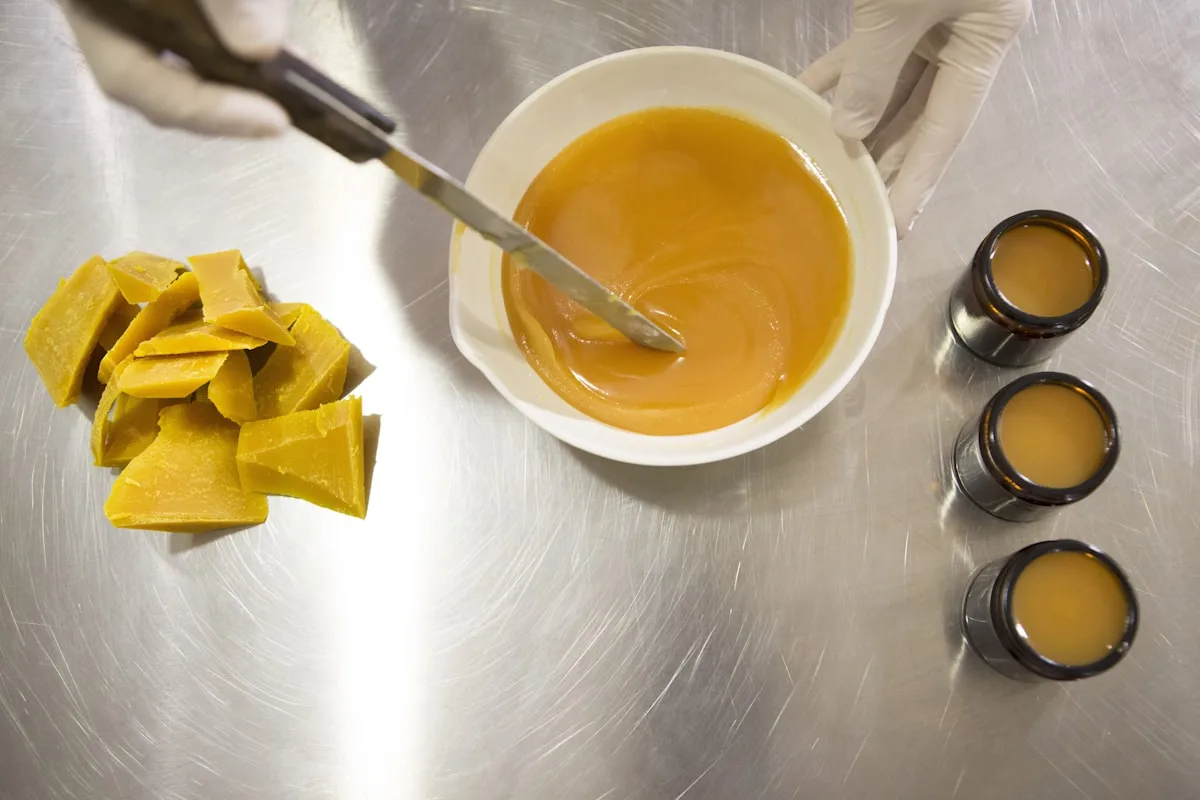
What it is: Beeswax is a natural wax mixture. It thickens anhydrous balms and leaves a flexible occlusive film on the skin.
Evidence context: Its principal role here is formulation performance: firmness, payoff and a surface barrier. That physical role does not require a medical-outcome claim.
Beeswax stabilizes the softer fats and oils so the balm holds together in the jar and melts gradually on contact.
Formulation function
The oil-phase antioxidant
Vitamin E
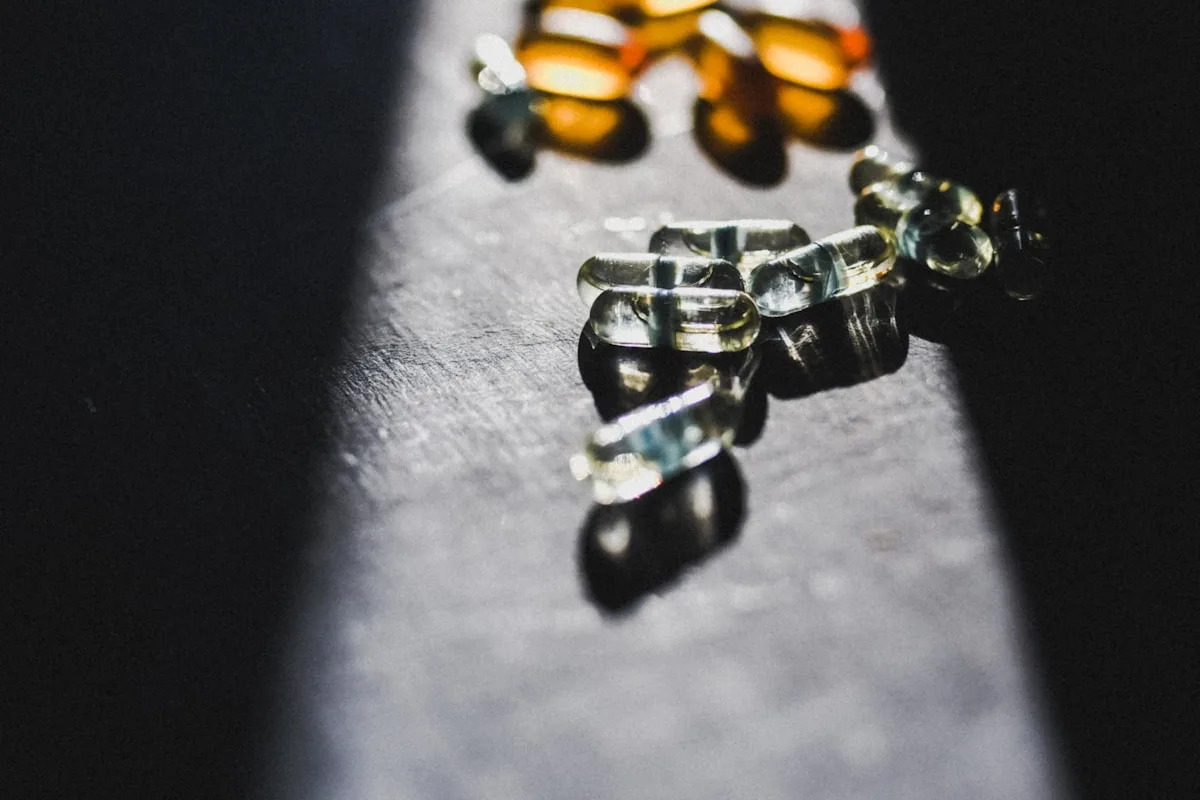
What it is: Tocopherol is a lipid-soluble form of vitamin E commonly added to oil-based cosmetics.
Evidence context: In this formula its clearest role is helping slow oxidation of the balm’s oils. That is product preservation support, not a promise to reverse skin aging.
Tocopherol supports the stability of tallow and coconut oil, rounding out the anhydrous lipid system.
The formulation rationale
Emollient base: Tallow and coconut oil provide complementary textures and soften the skin surface.
Humectant + occlusive: Honey attracts water; beeswax and the lipid base help reduce its escape from the surface.
Texture + stability: Beeswax gives the balm structure while tocopherol helps protect the oil phase from oxidation.
Finished balm image: Eternal Elixir media library. Coconut, honey, beeswax and tocopherol reference photography: Unsplash.