Last updated: · Originally published March 21, 2026 · Published by Eternal Elixir
Last updated: April 2026
The average U.S. woman uses twelve personal care products each day, exposing her skin to over 160 different chemical ingredients before she leaves the house. Men average six products with roughly 80 ingredients. The skincare industry has convinced us that healthy skin requires a multi-step routine involving cleansers, toners, serums, moisturisers, eye creams. Masks, exfoliants, and SPF — each sold separately, each containing its own cocktail of synthetic compounds, preservatives, and fragrances. But what if most of those steps are not only unnecessary but are actively working against your skin’s natural ability to maintain itself?
The minimalist skincare movement is not about neglecting your skin. It is about grasp what your skin actually needs, stripping away what it does not. And using a handful of ingredients that work with your biology rather than against it. For many people, that means replacing an entire bathroom cabinet with two things: grass-fed tallow and raw honey.
Why More Products Often Means Worse Skin
Your skin is not passive — it is an active, self-regulating organ with its own ecosystem. The stratum corneum (outermost skin layer) maintains a lipid barrier that prevents moisture loss and protects against pathogens. The acid mantle — a slightly acidic film on the skin’s surface — supports helpful microorganisms while inhibiting harmful ones. And sebaceous glands produce sebum, a natural oil that keeps skin supple and protected.
Modern skincare routines frequently disrupt every one of these systems. Foaming cleansers strip the lipid barrier and alter the acid mantle’s pH. Exfoliants thin the protective stratum corneum. Synthetic moisturisers introduce emulsifiers that can actually increase transepidermal water loss over time. And preservatives, fragrances, and active ingredients can disrupt the skin microbiome — the colony of helpful bacteria that maintains skin health at the surface level.
The result is a cycle many people recognise but cannot escape: products create the very problems they claim to solve. Driving the purchase of more products to address the new issues. Dry skin from harsh cleansers requires heavier moisturisers. Irritation from synthetic ingredients requires soothing serums. Disrupted microbiome leads to breakouts that require acne treatments. Each layer of intervention creates the need for the next one.
Stepping off this cycle requires accepting an uncomfortable truth: your skin already knows how to take care of itself. And most of what you are applying is getting in the way. The evidence for this is growing, with dermatological research increasingly acknowledging that less really is more when it comes to keeping a healthy skin barrier (Vaughn et al., 2016).
Tallow as Your Primary Moisturiser and Barrier Support
Grass-fed tallow is the foundation of a minimalist skincare routine for a straightforward biochemical reason: its fatty acid composition closely mirrors the lipid profile of human sebum. Both contain similar proportions of palmitic acid, stearic acid, and oleic acid. Along with fat-soluble vitamins A, D, E, and K that skin cells can use directly. When you apply tallow, your skin recognises it as compatible and absorbs it efficiently rather than treating it as a foreign substance that sits on the surface.
This biocompatibility means tallow does what synthetic moisturisers claim to do but often fail at — it integrates into your skin’s existing lipid matrix. Reinforcing the barrier from within rather than creating an artificial coating on top. The fat-soluble vitamins provide antioxidant protection, support cell turnover, and promote the healing of minor damage. And because tallow is anhydrous (contains no water), it requires no preservatives, emulsifiers. Or stabilisers — the very ingredients that most commonly cause irritation and disruption in conventional products.
For detailed evidence on how tallow compares to modern barrier-repair products, see our article on tallow versus ceramides for skin barrier repair.
The Eternal Elixir Grass-Fed Tallow Balm uses U.S. grass-fed tallow as its base, sourced from pasture-raised cattle for maximum nutrient density. A single jar replaces your moisturiser, eye cream, hand cream, lip balm, and body lotion — five products consolidated into one.
Raw Honey as Your Cleanser and Treatment
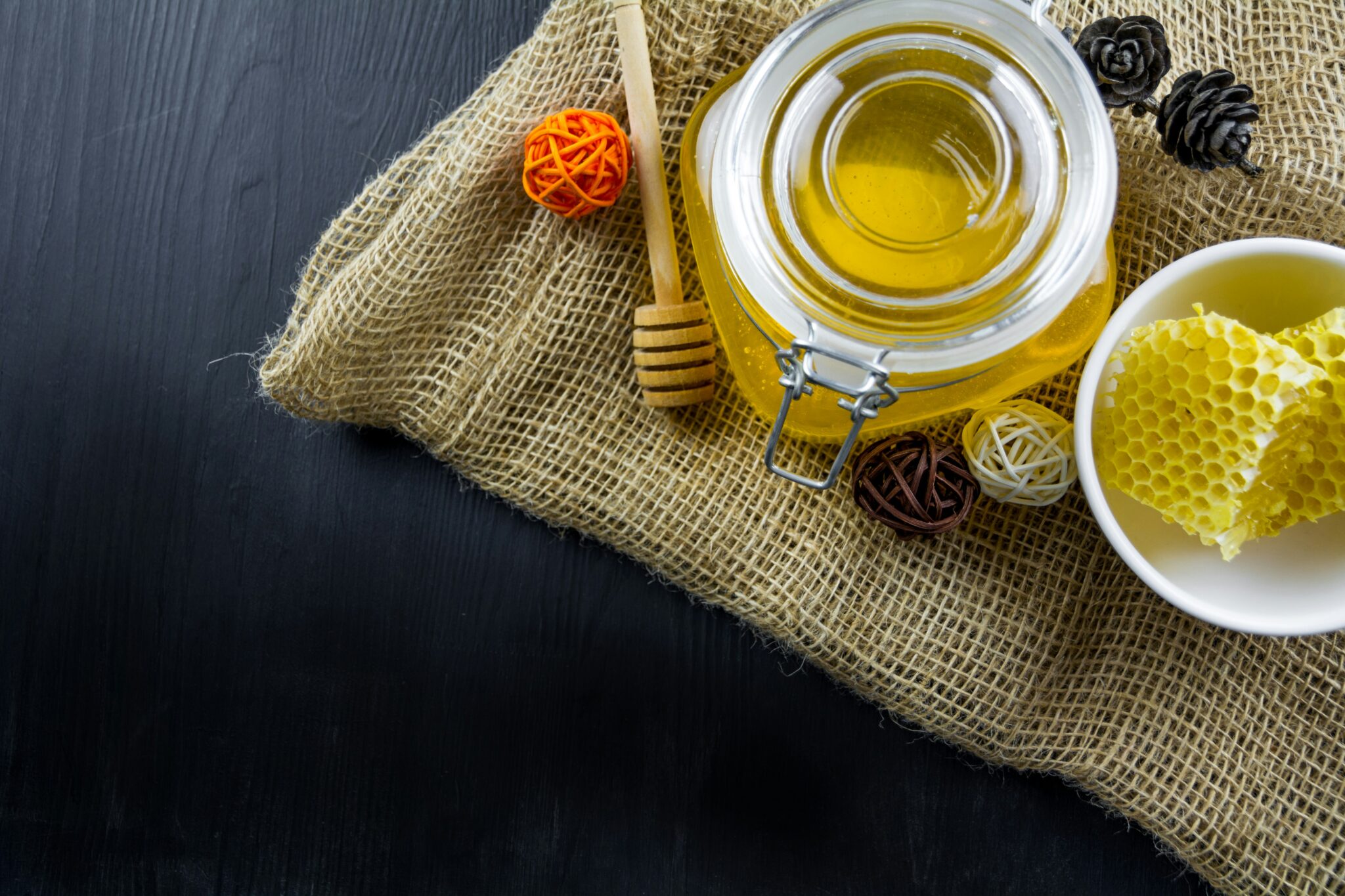
Honey — specifically raw, unpasteurised honey — is one of the most underrated skincare ingredients available. It has been used therapeutically for skin conditions across cultures for thousands of years, and modern research has validated its remarkably diverse helpful properties.
Raw honey is a natural humectant, meaning it draws moisture from the environment into your skin. It contains glucose oxidase, an enzyme that produces small amounts of hydrogen peroxide — enough to provide gentle antimicrobial action without the harshness of synthetic antibacterial agents. The pH of honey (typically 3.2 to 4.5) closely matches the skin’s natural acid mantle, supporting rather than disrupting the skin’s protective acidic environment. And it contains a complex mixture of polyphenols and antioxidants that reduce oxidative stress at the skin surface (Samarghandian et al., 2017).
As a cleanser, raw honey dissolves dirt, excess sebum, and surface impurities without stripping the lipid barrier or altering the acid mantle. Apply it to dry or slightly damp skin, massage gently for thirty to sixty seconds, and rinse with lukewarm water. Your skin is left clean, hydrated, and calm — not tight, dry, or stripped.
As a treatment mask, honey can be applied in a thicker layer and left on for fifteen to twenty minutes before rinsing. This extended contact time allows the humectant and antimicrobial properties to work more deeply. Making it particularly effective for acne-prone skin, areas of irritation, or patches of dryness that need intensive attention.
The Two-Product Routine: Morning and Evening
The simplicity of this routine is its greatest strength. In the morning, splash your face with cool water — no cleanser needed unless your skin feels particularly oily or you have been exercising. Apply a thin layer of tallow balm to slightly damp skin, focusing on any areas that tend toward dryness. The tallow absorbs within minutes, leaving skin nourished without a greasy residue. That is your complete morning routine.
In the evening, apply raw honey to dry skin and gently massage for thirty to sixty seconds to dissolve the day’s build-up of dirt. Environmental particles, and excess oil. Rinse thoroughly with lukewarm water and pat dry. While the skin is still slightly damp, apply tallow balm as your evening moisturiser. The overnight application gives the fat-soluble vitamins and fatty acids extended contact time to support repair and barrier maintenance while you sleep.
That is it. Two products, two minutes morning and evening, zero synthetic ingredients, and a fraction of the cost of a conventional multi-product routine. Your skin receives everything it needs — cleansing, hydration, nourishment, barrier support, and antimicrobial protection — from two ingredients that humans have used for millennia.
The Transition Period: What to Expect
Switching from a multi-product routine to a minimalist tallow-and-honey approach usually involves a transition period of two to four weeks. During this time, your skin is recalibrating — adjusting its sebum production, rebuilding its acid mantle. And restoring microbial balance after years of interference from synthetic products.
Common experiences during the transition include a temporary increase in oiliness as sebaceous glands adjust their output, minor breakouts as the skin purges congestion that synthetic products were masking. And a period of feeling “different” — your skin may feel unfamiliar without the silicone-smooth coating of conventional moisturisers. These effects are temporary and typically resolve within two to four weeks as your skin establishes its new, self-regulated baseline.
The key during this period is patience and consistency. Do not revert to old products out of anxiety — the temporary disruption is your skin transitioning to a healthier, more self-sufficient state. For more context on this transition, see our guide to ancestral skincare principles.
Addressing Common Concerns
What about sunscreen?
Minimalist skincare does not mean ignoring sun protection. If you are spending extended time in direct sunlight, apply a mineral-based sunscreen (zinc oxide or titanium dioxide) over your tallow layer. Mineral sunscreens sit on the skin’s surface and reflect UV radiation without the chemical absorption concerns of synthetic sunscreen actives. For daily incidental sun exposure — the brief periods of sunlight most people encounter during commuting or errands — the fat-soluble vitamins in tallow provide modest antioxidant support. But they are not a substitute for sunscreen during prolonged exposure.
Will tallow clog my pores?
This is the most common concern, and the answer for most people is no. Tallow’s fatty acid profile is so similar to human sebum that it is absorbed efficiently rather than sitting in pores. Some people with very acne-prone skin may need to start with a thinner application and gradually increase. If you have a known sensitivity to oleic acid (which can be comedogenic for some people). Patch testing on a small area of your face for a week before committing to full-face application is a sensible approach.
Can I add other products to this routine?
The routine is a foundation, not a cage. If you have specific concerns that tallow and honey do not fully address — such as hyperpigmentation. Deep wrinkles, or rosacea — you can layer a single targeted treatment underneath the tallow. The point of minimalism is not rigid limitation; it is eliminating the unnecessary while keeping what genuinely works. Most people find, however, that many of the skin issues they were treating with multiple products either resolve or greatly improve once they stop overwhelming their skin with synthetic ingredients. Explore the full skincare range at the Eternal Elixir store. And see our deep dive into tallow versus seed oil-based moisturisers for more on why your current products may be doing more harm than good.
Related Reading
If you found this article helpful, you may also enjoy these related guides:
- Why Your Skin Barrier Is Broken (And How Tallow Rebuilds It Faster Than Ceramides)
- Tallow for Baby Skin: Is Grass-Fed Tallow Safe for Newborns and Sensitive Skin?
Recommended: Eternal Elixir Grass-Fed Tallow Balm
U.S.-made, third-party tested, 90 capsules per bottle. Formulated for maximum bioavailability.
View ProductFrequently Asked Questions
How should I take this supplement?
Follow the dosage instructions on the product label. Most supplements are best taken with a meal to improve absorption. If you are on any medication, consult your healthcare practitioner before starting a new supplement routine. Consistency matters more than timing for most compounds.
Are there any side effects I should know about?
Side effects vary by compound and individual. Mild digestive discomfort is the most commonly reported issue and usually resolves within a few days. Start with a lower dose and increase gradually. Pregnant or breastfeeding women should seek professional medical advice before supplementing.
How long before I notice results?
Most people report noticeable changes within two to four weeks of consistent daily use. Some benefits, such as improved energy, may appear sooner, while deeper cellular effects can take eight to twelve weeks. Track your baseline markers for the clearest picture of progress.