Last updated: · Originally published March 21, 2026 · Published by Eternal Elixir
Last updated: April 2026
Athletes push their bodies hard. Intense training, strict supplement use plans, high-protein diets, and the occasional use of results-supporting compounds all place major demands on the liver and digestive system. Yet liver health rarely makes it onto the average athlete’s radar until something goes wrong — an unexpected spike in liver enzymes on blood work. Chronic bloating that will not resolve, or a general plateau in recovery that no amount of sleep seems to fix.
TUDCA (tauroursodeoxycholic acid) is changing that conversation by offering targeted bile acid support that addresses the specific metabolic stresses athletes face. This is not a general liver detox pitch. TUDCA has a distinct process of action backed by published research, and its relevance to athletic results is more direct than most people realise.
What Is TUDCA and Why Should Athletes Care?
TUDCA is the taurine-conjugated form of ursodeoxycholic acid (UDCA), a bile acid that occurs naturally in small quantities in human bile. While UDCA has been used in clinical medicine for decades — primarily for gallstone dissolution and cholestatic liver conditions — TUDCA offers superior water solubility and absorption rate. This means it reaches target tissues in meaningful levels more efficiently than its parent compound.
For athletes, TUDCA’s relevance comes down to three core functions. First, it protects hepatocytes (liver cells) from stress-induced damage by acting as a chemical chaperone. Second, it supports healthy bile flow for fat digestion and nutrient absorption — a process athletes depend on for getting value from their nutrition. Third, it reduces endoplasmic reticulum (ER) stress, a cell process that becomes greatly elevated during intense physical training and recovery periods.
The liver processes everything an athlete consumes — from food and supplements to the metabolic byproducts of exercise itself. Ammonia from protein breakdown, lactic acid clearance, free radical neutralisation, and supplement body handling all pass through the liver. When that handling capacity is compromised, recovery slows, nutrient utilisation drops, and swelling can build unchecked. TUDCA helps maintain the liver’s functional capacity under these elevated loads.
How Training Stress Affects Liver Function
Most athletes think of recovery in terms of muscles, joints, and sleep. But the liver is arguably the most overworked organ in a serious training programme. During and after intense exercise, the liver simultaneously handles elevated ammonia from protein body handling, increased free radical making requiring glutathione recycling. handling of lactic acid and other metabolic waste, body handling of any supplements or compounds in the athlete’s plan. Bile making for the digestion of dietary fats consumed during recovery meals.
Research has documented transient elevations in liver enzymes (ALT and AST) following intense resistance training — a sign that hepatocytes are under mechanical and metabolic stress (Pettersson et al., 2008). While these elevations are often temporary and benign in isolation. Chronic training mixed with aggressive supplement use can push liver stress into a range that impairs recovery over time. Athletes who train five or six days per week and consume multiple supplements daily are placing sustained demands on hepatic function that most recreational exercisers never approach.
This is where TUDCA enters the picture. Rather than acting as a generic “liver cleanser,&rdquo. it namely addresses the cell processes through which training stress damages hepatocytes — especially the ER stress path that connects metabolic overload to cell swelling and issues.
TUDCA’s process: ER Stress and the Unfolded Protein Response
The endoplasmic reticulum (ER) is the cell machinery key for protein folding — a process critical to every cell in the body. But especially relevant to athletes whose muscles are constantly synthesising new protein for repair and growth. When the ER becomes overwhelmed by the volume of proteins it needs to fold correctly, a state called ER stress develops. This triggers the unfolded protein response (UPR), which can lead to cell swelling, impaired function. In severe cases, apoptosis — programmed cell death.
TUDCA is one of the most extensively studied chemical chaperones. Meaning it assists the ER in folding proteins correctly and reduces the build-up of misfolded proteins that trigger the stress response. A landmark study published in Science showed that TUDCA dosing greatly reduced ER stress markers in metabolically stressed tissues. Restoring cell function and reducing swelling signalling (Ozcan et al., 2006).
For athletes, this translates to better cell resilience during periods of high training volume, improved recovery at the cell level rather than just the muscular level. And sustained protection for liver cells that are handling elevated metabolic loads day after day. This process also has effects beyond the liver — ER stress affects muscle tissue, the nervous system. And the gut lining, all of which matter for athletic results and recovery quality.
TUDCA for Recovery and Nutrient Absorption
Bile flow is not a glamorous topic, but it is basic to athletic nutrition. Bile acids emulsify dietary fats, enabling the absorption of fat-soluble vitamins (A, D, E. K) and essential fatty acids that play critical roles in hormone making, swelling management, and cell repair. Athletes who consume high-fat diets for sustained energy, take fat-soluble supplements like vitamin D3 or omega-3s. Or use MCT oil and other lipid-based results fuels all depend on efficient bile making and flow to actually absorb what they are consuming.
TUDCA supports bile flow by promoting the secretion of bile acids from hepatocytes into the bile ducts, a process called choleresis. When bile flow is sluggish — which can happen with high training loads, dehydration, or certain supplements that affect liver function — fat digestion becomes inefficient. The result is bloating, poor absorption of key nutrients, and possibly the loss of expensive fat-soluble supplements passing through the digestive tract unabsorbed.
Athletes who notice persistent digestive discomfort after high-fat meals, who seem to respond poorly to fat-soluble supplements despite consistent dosing. Or who feel unexplained bloating during training blocks may find that TUDCA supplement use improves both digestion and nutrient utilisation. This indirect effect on recovery — getting more out of the food and supplements you are already consuming — is one of TUDCA’s most practical and often overlooked benefits for athletes.
Practical plan for Athletes
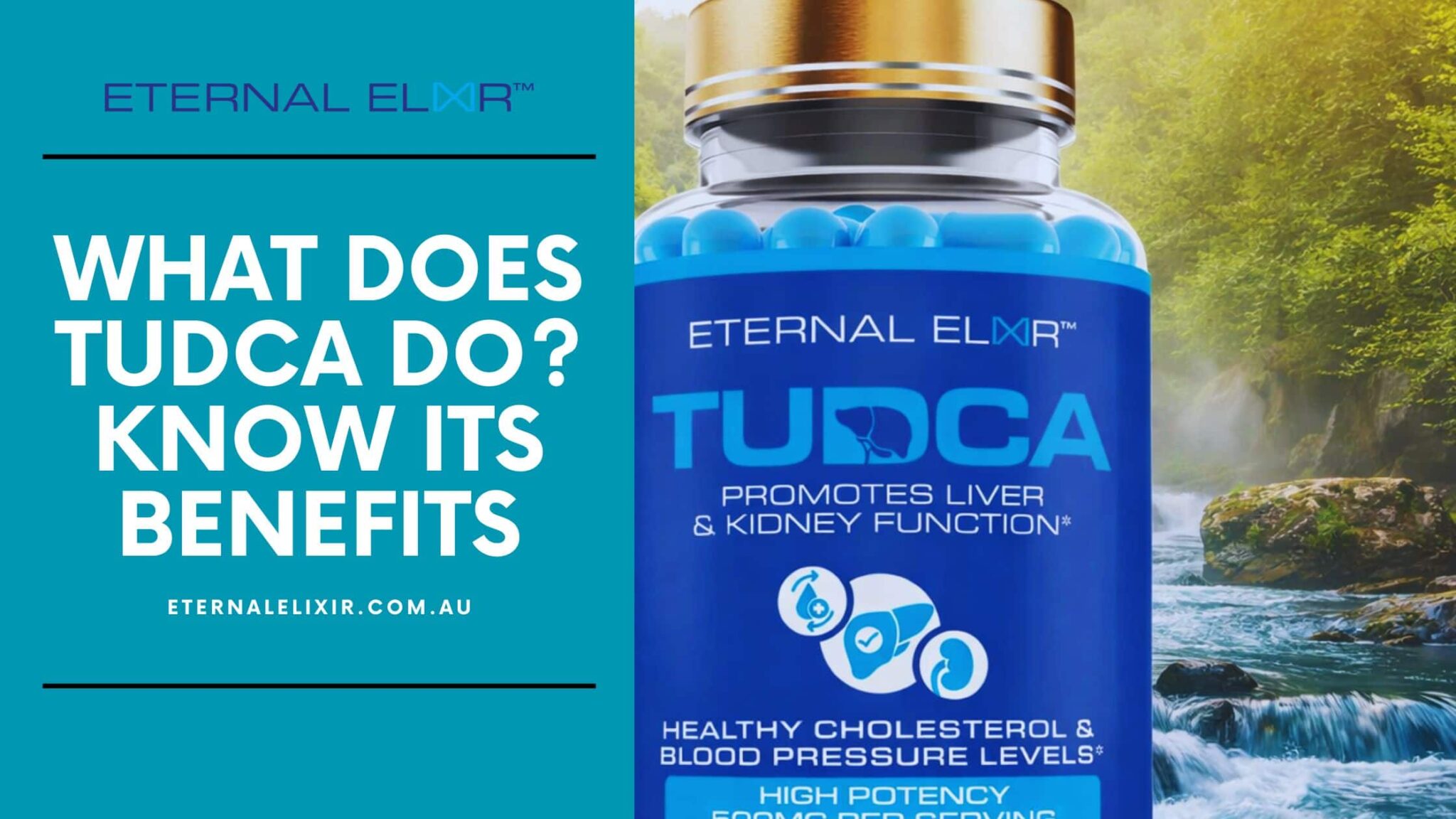
Dosing TUDCA for athletic support often falls in the 250 to 500 mg per day range. Athletes running more demanding plans — especially those using compounds that place additional liver stress — may use the higher end of this range or consult with a doctor about temporarily increasing the dose. The Eternal Elixir TUDCA 500mg provides 90 capsules per bottle. Giving athletes a full three-month supply at the standard protective dose or 45 days at the higher 1,000 mg clinical dose.
Timing is straightforward: take TUDCA with your largest meal of the day. Ideally one with dietary fat, to support bile flow when it is most needed. Some athletes prefer splitting the dose — 250 mg with breakfast and 250 mg with dinner — which may provide more consistent bile support across the full day of eating.
TUDCA stacks well with other recovery-focused supplements. Pairing it with glutathione provides paired cell-shield and cleansing support, addressing both ER stress and oxidative damage simultaneously. Adding TUDCA to a gut health plan can improve the bile-microbiome axis that influences systemic swelling and immune function — both of which directly affect how quickly an athlete recovers between sessions.
TUDCA vs Milk Thistle for Athletes
Many athletes default to milk thistle (silymarin) for liver support, and it is a reasonable supplement with published evidence behind it. However, TUDCA and milk thistle work through fundamentally different processes. Milk thistle primarily acts as a hepatoprotective cell-shield, scavenging free radicals that damage liver cell membranes. TUDCA works at a deeper cell level — addressing ER stress, supporting bile flow, and protecting against apoptosis paths that milk thistle does not directly effect.
For athletes with elevated liver stress from training and supplement use, TUDCA addresses root causes rather than just managing oxidative symptoms. The two compounds can be used together for maximal hepatic protection, but if choosing only one. TUDCA offers broader and more targeted protection for the specific stresses athletes encounter. This is especially true for athletes who are also dealing with digestive issues. Since milk thistle has minimal effect on bile flow while TUDCA directly supports it.
Frequently Asked Questions
Can TUDCA improve my athletic results directly?
TUDCA is not a direct results enhancer like creatine or caffeine. Its value lies in supporting the systems that enable results — liver function, nutrient absorption, cell recovery. Bile-mediated fat digestion. Think of it as infrastructure support for your body: it does not make you faster or stronger on its own. But it helps your body process the training stimulus and nutritional inputs more efficiently. Over weeks and months, this compounds into measurably better recovery and nutrient utilisation.
Should I take TUDCA year-round or cycle it?
Most athletes can take TUDCA continuously at 250 to 500 mg per day without concerns. Unlike compounds that require cycling due to receptor downregulation or tolerance, TUDCA works through a chemical chaperone process that does not diminish with kept use. That said, periodic blood work tracking liver enzymes (ALT, AST, GGT) is always smart practice for any serious athlete, whether taking with TUDCA or not. It gives you objective data rather than relying on how you feel.
Is TUDCA safe to combine with my current supplement stack?
TUDCA has an excellent safety profile and is compatible with most supplements athletes use. Including protein powders, creatine, pre-workout formulas, branched-chain amino acids, and fat-soluble vitamins. The one practical thought is timing with other bile acid supplements or digestive enzymes — take them together with meals for paired support rather than on an empty stomach. Browse the full range of supportive supplements at the Eternal Elixir store to build a plan that covers all your recovery bases.
How quickly will I notice effects from TUDCA?
Digestive improvements — especially reduced bloating after fatty meals and smoother digestion of high-protein meals — often become noticeable within the first one to two weeks. Improvements in recovery quality and liver enzyme markers often require four to eight weeks of consistent use to become measurable on blood work. Athletes who track their blood panels will see the most objective evidence of TUDCA’s effects on hepatic function over time. And many report that liver enzymes normalise within a single testing cycle.
Related Reading
If you found this article helpful, you may also enjoy these related guides:
- Glutathione: What United States's Master cell-shield Can Do For Your Skin, Immunity and Longevity
- Shilajit for Men: What the Research Says About Testosterone, Energy and results
suggested: Eternal Elixir TUDCA
U.S.-made, third-party tested, 90 capsules per bottle. Formulated for maximum absorption rate.
View Product